
Byfield National Park, QLD
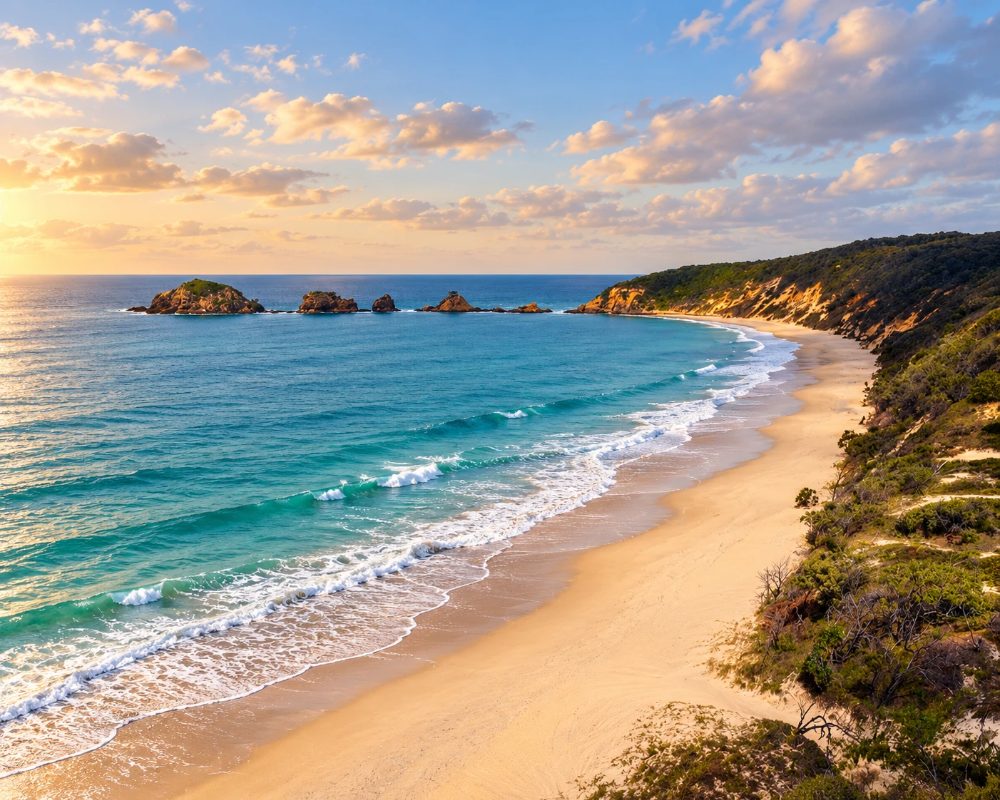
Byfield National Park protects the wild coast between Corio Bay and the Shoalwater Bay military area, about 30 to 60 kilometres north of Yeppoon. Behind long surf beaches rise parabolic sand dunes five or six kilometres long, some of the largest in Australia, with heath, swamp and forest between them. It is four-wheel-drive country from start to finish.
Known For
- Five Rocks and Stockyard Point
- Driving Nine Mile Beach
- Giant dunes and empty surf beaches
You need a high-clearance four-wheel drive, lowered tyre pressures, recovery gear and some sand-driving experience. The tracks are soft and steep in places, and a notorious sandhill on the way in turns many vehicles back. There is little phone coverage.
Things To Do in Byfield National Park
Five Rocks and Stockyard Point
The headland at Stockyard Point has a tiny settlement of beach shacks and wide views up and down the coast. Just north, a walking track drops to Five Rocks Beach, where a line of rock stacks runs out into the sea. Little Five Rocks Beach, below the headland, is sheltered and good for a swim.
Nine Mile Beach
South of the headland, Nine Mile Beach is a long run of hard sand that can be driven around low tide, with surf, fishing gutters and a wrecked boat or two. Check the tide times and keep to the firm sand.
Dunes and walks
The Orange Bowl, a huge sand blow behind the beach, can be climbed for views over the park. Short tracks lead to headland lookouts.
Fishing and surfing
The beaches produce whiting, dart, bream and tailor, and the surf at Nine Mile and Five Rocks is the most reliable north of Agnes Water.
Sandy Point and Farnborough Beach
The southern end of the park is reached from Farnborough Road north of Yeppoon, where a 4WD beach run heads north along Farnborough Beach to Sandy Point at the mouth of Corio Bay. Queensland Parks is running a pest control program at Sandy Point until 31 December 2026, so check the park alerts before you go.
Where To Stay
Five Rocks camping area has a dozen defined sites behind the dunes with picnic tables, a toilet, a cold shower and untreated water. Nine Mile Beach has four small camping zones behind the foredune with no facilities. Campfires are allowed at Five Rocks, subject to Queensland Parks conditions and any fire bans. Book permits ahead with Queensland Parks. The forest camps near Byfield village suit ordinary cars.
Five Rocks camping area, just north of the Stockyard Point shacks, is reached through the national park but sits in Byfield Conservation Park. Sites are on sand, dirt or timber pallets among coastal woodland next to a beach closed to vehicles, with cold showers, composting toilets, picnic tables and tap water that must be treated before drinking. Generators may run from 8 am to 7 pm only, and must be quiet models. Phone coverage is unreliable, so book your permit online before leaving Yeppoon or Byfield. The park is no place for a caravan: the soft sand tracks and the big sandhill on the way in suit only well-equipped 4WDs, and even off-road camper trailers need experienced drivers.
Leave the van at Water Park Creek or Upper Stony in Byfield State Forest, where QPWS sites take caravans and small motorhomes, or at Ferns Hideaway Resort on Cahills Road, which has caravan sites, cabins and hot showers. Couples can also base themselves at Byfield Cabins on Yaxleys Road and do the beach as a day trip.
Eat & Drink
Bring everything, including drinking water. The Byfield General Store is the last place for supplies.
There is no food or water for sale inside the park. The nearest is the Byfield General Store at 2234 Byfield Road, on the drive in, for coffee, light meals, groceries, camping supplies and fuel, and the licensed restaurant at Ferns Hideaway Resort on Cahills Road, Byfield. Yeppoon, about 40 km south of Byfield, has supermarkets and the full range of cafes and pubs.
History
The park is in Darumbal country. Cook sailed past in 1770. The area was grazed and then reserved, becoming a national park in the 1980s.
Getting to Byfield National Park
Drive north from Yeppoon to Byfield, then follow the signs east through the state forest to the park entrance. From there it is about an hour of sand driving to Stockyard Point. The southern section around Corio Bay is reached separately from Farnborough Road, north of Yeppoon.
Experiences
- Active
- Caravan and Camping
- Nature based
- Remote
Popular Activities
- Beach
- Bush Walking
- Caravan and Camping
- Fishing
- Fishing - Beach
- National Park
- Off Road Driving
- Surfing
About Byfield National Park
- Locality: Rural locality
- Byfield National Park Postcode: 4703
- State: Queensland
- Region: Capricorn
- Latitude: -22.7800
- Longitude: 150.8000
- Timezone: Australia/Brisbane
