
Drayton, QLD
Drayton lies on the south-western edge of Toowoomba, about six kilometres from the city centre. In the 1840s it was the only town on the Darling Downs, a rough settlement of inns, stores and blacksmiths serving the squatters. Its neighbour up the hill soon overtook it, and Drayton was left as a quiet village that the city eventually surrounded. A few precious buildings survive from its early days.
Known For
- The Royal Bulls Head Inn, built in 1859
- The birthplace of settlement on the Darling Downs
- Old churches and a pioneer cemetery
Things To Do in Drayton
Royal Bulls Head Inn
The first inn on this site was opened in 1847 by William Horton, a former convict who became one of the leading men of the district. The present building, of 1859, is a long, low timber hotel with shingle roofs under iron, cedar joinery and rooms furnished as they would have been for travelling squatters and their families. It belongs to the National Trust and is open on set days and for special events; check before visiting.
St Matthews Church
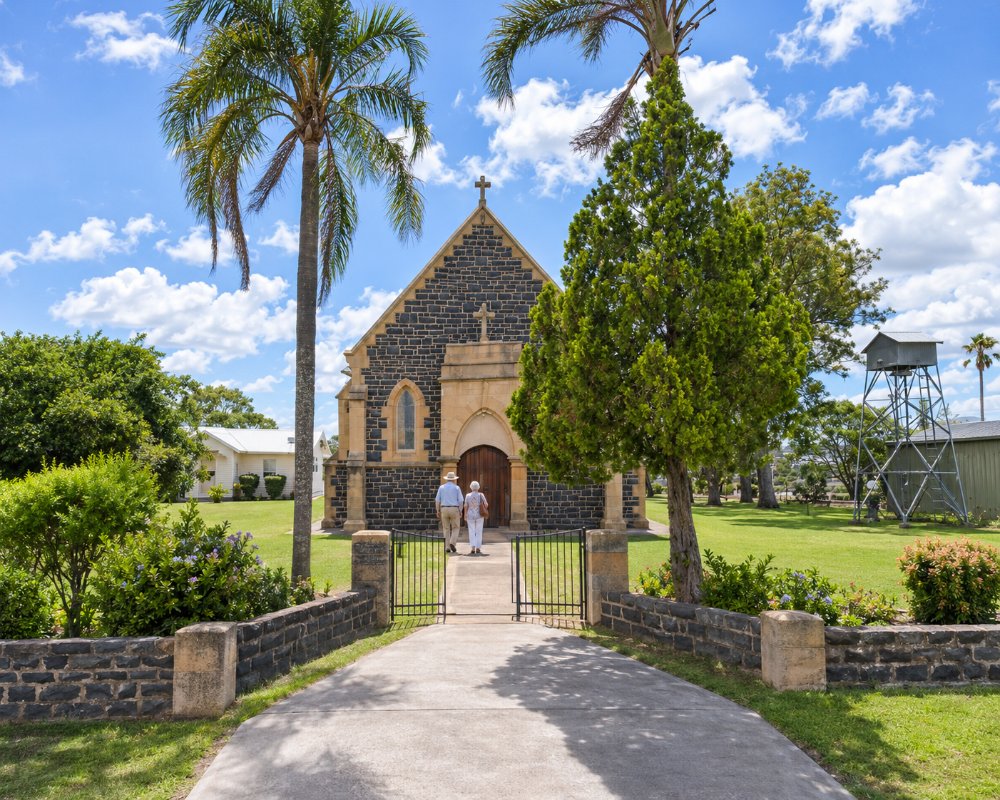
The Anglican parish of Drayton is the oldest on the Downs. The present stone church dates from the 1880s and holds memorials to pioneer families.
Cemetery
The Drayton and Toowoomba Cemetery, on the road towards the city, is one of the oldest and largest in regional Queensland, with graves from the 1850s onwards.
Steele Rudd
Arthur Hoey Davis, the writer Steele Rudd, was born in Drayton in 1868, the son of a blacksmith, before the family moved to their selection at Emu Creek.
Glennie cairn and the old school
A stone cairn on the corner of Rudd and Cambooya streets, unveiled in 1940 before a crowd of about 500, marks the site of the first church on the Darling Downs, founded by the pioneering Anglican clergyman Benjamin Glennie. A short walk away on Brisbane Street, Drayton State School opened in 1851 and is one of the oldest state primary schools in Queensland; the school is heritage listed, as is O’Shea’s Drayton Cottage on Gwynne Street. Together with the inn and St Matthew’s, they make an easy heritage walk of about an hour.
Where To Stay
Motels line the highway through the southern suburbs of Toowoomba, a few minutes from Drayton.
Drayton has no caravan park of its own, but two are close. BIG4 Toowoomba Holiday Park on Eiser Street in neighbouring Harristown, about 3 km north, has cabins, villas and pet-friendly powered and ensuite sites, a pool and barbecues, and is the handiest base for exploring the old village. Toowoomba Caravan Park on Ruthven Street, about 6 km north-east, has powered sites and a dump point. The Toowoomba Showgrounds at Glenvale, about 10 km north-west, takes caravans, motorhomes and camper trailers without bookings and also has a dump point.
For a hotel room, Potters Boutique Hotel on Margaret Street and Oaks Toowoomba Hotel on Annand Street are both about 7 km away in the city centre, with restaurants and bars within walking distance. Travellers who would rather stay in a country pub can drive about 15 km south to the Bull & Barley Inn at Cambooya, which has accommodation and a bistro open every day.
The National Trust also hosts events at the Royal Bull’s Head Inn, so check its calendar if you are planning a weekend visit.
Eat & Drink
Drayton has a hotel, takeaways and a bakery; the city centre has far more choice.
For a sit-down meal, most visitors head into the city or to the neighbouring towns. The Westbrook Tavern on Main Street, Westbrook, about 7 km south-west, has a bistro, a bar with tap beers and cocktails, and a family-friendly atmosphere. The Bull & Barley Inn at Cambooya, about 15 km south, is a 1902 railway hotel with a busy seven-day bistro, weekly steak and parmy specials and a Sunday roast. In the city centre, about 7 km north-east, The Baker’s Duck on Railway Street and Campbell Street sells sourdough and pastries, The Finch on Ruthven Street serves breakfast and lunch seven days, and Burrow on Railway Street does brunch. For a pub meal in town, the Spotted Cow on the corner of Ruthven and Campbell streets has a refurbished dining room.
Supermarkets and fuel are in Toowoomba’s southern suburbs, a few minutes north along Anzac Avenue.
History
Thomas Alford opened a store here in 1842 and named the place after his home village in England. Drayton had the Downs’ first church, school and newspaper. Poor water supply held it back, and from the 1850s trade shifted to the settlement known as The Swamp, which became Toowoomba.
Getting to Drayton
From the centre of Toowoomba, follow Anzac Avenue south-west towards the Gore Highway and Westbrook; Drayton is about ten minutes away.
Experiences
- City
- Cultural
- Historic/Heritage
- Rural/Country
Popular Activities
- City Sightseeing
- Food and Wine
- Sightseeing
About Drayton
- Locality: Suburb
- Drayton Postcode: 4350
- State: Queensland
- Region: Southern Queensland Country
- Latitude: -27.60076
- Longitude: 151.91446
- Elevation: 619m
- Timezone: Australia/Brisbane
