
Mount Walsh National Park, QLD
Mount Walsh National Park rises abruptly from the farmland just south of Biggenden, about an hour and a half west of Maryborough. Its northern end is a wall of bare granite, the Bluff, which towers over the town and catches the light at dawn and dusk. Behind it lies a wild range of peaks, gorges and creeks, with only a handful of marked tracks. It is a park for a picnic with a view, a swim in a rock pool or, for the experienced, one of the best scrambles in south-east Queensland.
Known For
- The Bluff, a granite face rising 703 metres
- Rock pools and cascades on Waterfall Creek
- Rugged, little-visited country for experienced walkers
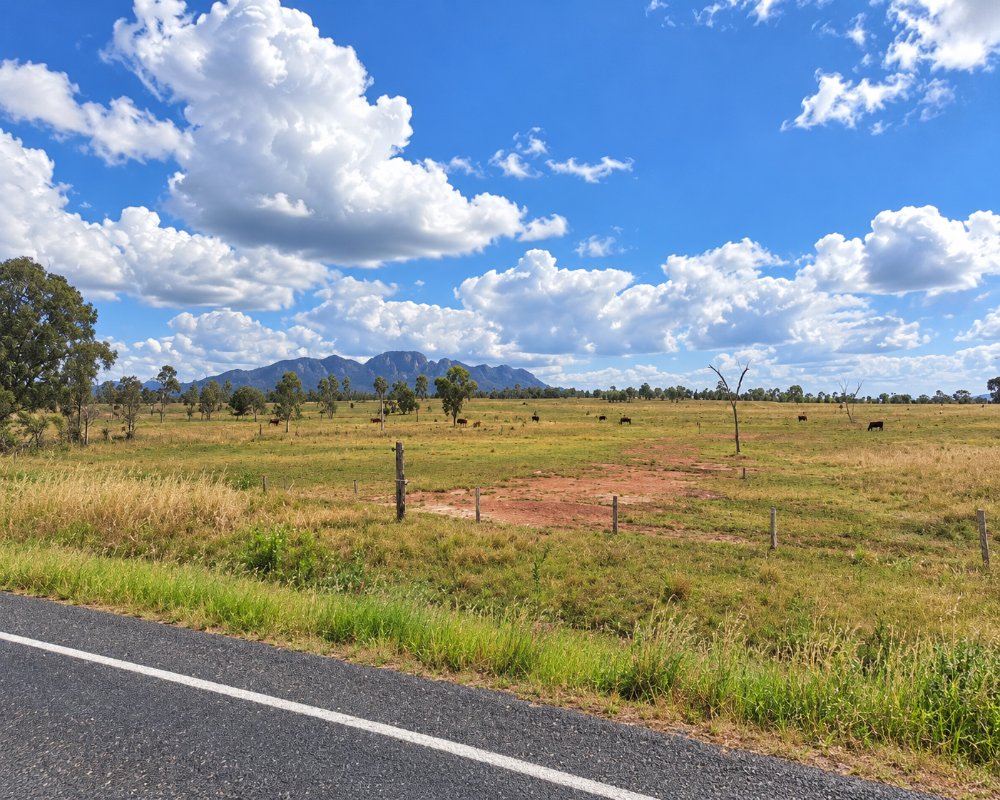
The park covers more than 5,000 hectares of the Coast Range. Open eucalypt forest and heath grow on the exposed ridges, with hoop pines and dry rainforest in the sheltered gullies. Wedge-tailed eagles and peregrine falcons ride the updraughts along the cliffs, and rock wallabies and lace monitors live among the boulders.
Things To Do in Mount Walsh National Park
Mount Walsh day-use area
Seven kilometres south of Biggenden by a sealed and gravel road, a picnic area sits in open forest at the foot of the Bluff, with tables, toilets and a close view of the cliffs. A short walk of a few hundred metres leads to a rocky creek gully and a lookout.
The summit route
From the picnic area, an unmarked route climbs steeply up a gully and over exposed granite slabs to the top of the Bluff. It is only a few kilometres return but involves rock scrambling, route finding and big drops, and takes four to five hours. It should be attempted only by fit, experienced walkers in dry weather, with plenty of water. The reward is a view across the Burnett from the coast to the inland ranges.
Waterfall Creek rock pools
On the eastern side of the park, a walk of about three kilometres return leads from the Waterfall Creek car park to a series of granite pools and small falls, a superb place to swim when the creek is flowing. The car park is reached by Utopia Road, about eight kilometres of gravel off the Maryborough to Biggenden road, suitable for ordinary cars only in dry weather. The rocks are very slippery when wet.
Coongarra Rock
In the southern section, reached from the Biggenden side off Lords Road, about 24 kilometres south of town, Coongarra Rock is a granite monolith standing above hoop pine vine forest (the park also extends towards Gayndah).
Remote walking
Experienced bushwalkers can explore the interior of the range on multi-day trips, with a permit for bush camping. There are no tracks or facilities, and navigation skills are essential.
Where To Stay
There are no formal camping areas in the park, and camping is not allowed in the Waterfall Creek area. Remote bush camping elsewhere needs a permit.
Biggenden has a motel, a caravan park and pub rooms a few minutes from the day-use area, and there is low-key camping at Paradise Dam, about 40 minutes away.
The nearest beds and powered sites are in Biggenden, about 7 km north of the day-use area. Mountain View Caravan Park on Walsh Street, now under new leaseholders who are upgrading the cabins, has concrete-slab powered sites, unpowered sites and air-conditioned cabins with views of the Bluff. Biggenden Motel is on Edward Street, and the Commercial and Grand hotels both let rooms. Paradise Dam’s lower camping area, about 40 minutes away, has paid lakeside camping with toilets, gas barbecues and non-potable water. North Burnett council allows camping on council land only where it is signed. Caravans should stay on the sealed roads and park in town: the Waterfall Creek access road is narrow and gravel, and the Coongarra Rock tracks are 4WD only.
Eat & Drink
Bring all food and drinking water; creek water should be treated. Biggenden has a bakery, cafes and a hotel.
There is no food or drinking water in the park. Biggenden, about 7 km north, has the nearest meals: the Commercial Hotel and the Grand Hotel for pub dining, The Bigg Gallery Cafe for coffee and pancakes among local art, and Biggenden Country Cafe for burgers, pizzas and takeaway. Childers, about 55 km east, has the region’s widest choice. The day-use area has picnic tables and barbecues for a packed lunch below the Bluff.
History
The range is the country of the Wakka Wakka people. It was named after William Henry Walsh, the squatter who took up Degilbo station in the 1840s and later sat in the Queensland Parliament. Gold was mined on its fringes in the 1880s, at the short-lived fields of Paradise and Shamrock, and timber was cut from the foothills, but the steep granite core was left untouched. The first section of the national park was declared in 1947.
Getting to Mount Walsh National Park
From Biggenden, follow the signs south along National Park Road to the day-use area. For Waterfall Creek, drive east from Biggenden towards Maryborough and turn onto Innooroolabar Road and then Utopia Road. Biggenden is 85 kilometres from Maryborough and 50 kilometres from Childers.
Experiences
- Active
- Nature based
- Remote
Popular Activities
- Bird Watching
- Bush Walking
- National Park
- Rock Climbing
- Swimming
- Wilderness
About Mount Walsh National Park
- Locality: National park
- Mount Walsh National Park Postcode: 4621
- State: Queensland
- Region: Bundaberg
- Latitude: -25.5700
- Longitude: 152.0500
- Timezone: Australia/Brisbane
