
Auburn and Lidcombe, NSW
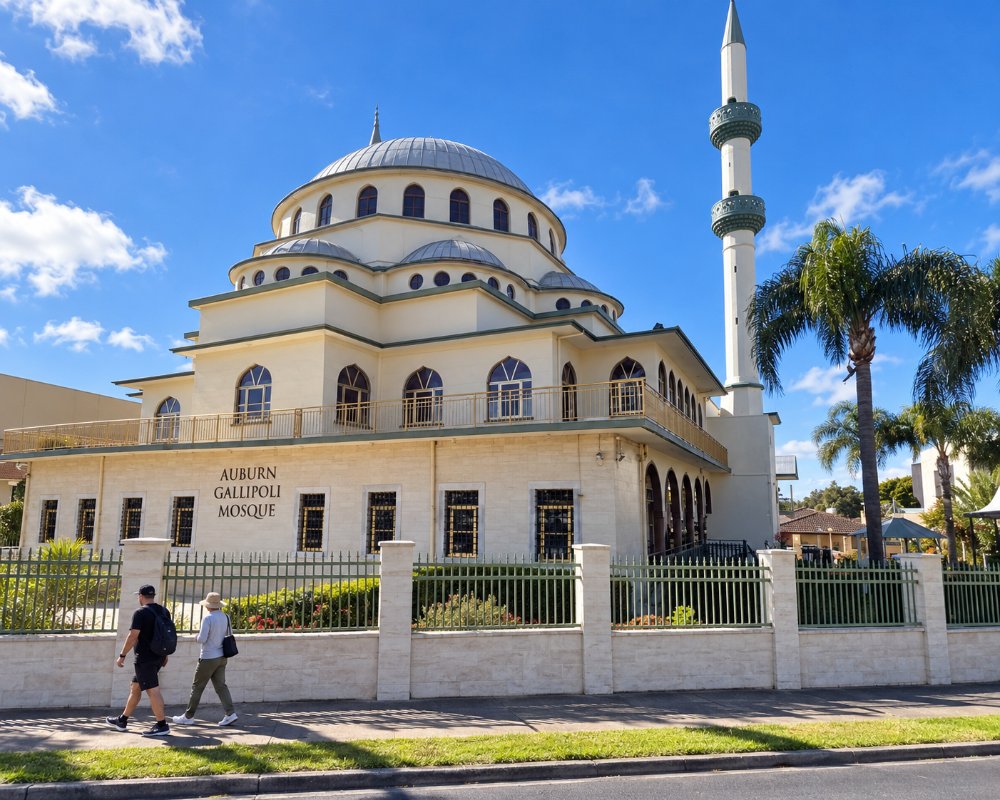
Auburn and Lidcombe are neighbouring suburbs about 18 kilometres west of the centre of Sydney, just south of Sydney Olympic Park. Auburn is the centre of Turkish life in the city and has a strong Afghan, Lebanese and Chinese presence as well, while Lidcombe has become known for Korean food. Between them they have a magnificent mosque, a celebrated garden and the largest cemetery in the southern hemisphere.
Known For
- Auburn Gallipoli Mosque
- Auburn Botanic Gardens and cherry blossoms
- Turkish, Afghan and Korean food
Each suburb has its shops beside its railway station, one stop apart on the main western line. Auburn Road, south of Auburn station, is the busiest street, crowded with grocers, kebab shops, bakeries and fabric stores. Lidcombe is smaller, with restaurants clustered around the station, and Rookwood Cemetery spreads out to its south.
Things To Do in Auburn and Lidcombe
Auburn Gallipoli Mosque
Completed in 1999, this is one of the most beautiful mosques in Australia, built in classical Ottoman style with a great central dome, two slender minarets and an interior of marble, calligraphy and hand-painted tiles. It was funded largely by the local Turkish community, and its name honours the shared history of Australians and Turks at Gallipoli. Visitors are welcome outside prayer times if modestly dressed, and guided tours can be arranged.
Auburn Botanic Gardens
These gardens on the Duck River include a large Japanese garden with a lake, a teahouse, a red bridge and an avenue of cherry trees. In late August the trees blossom and the gardens hold the hugely popular Sydney Cherry Blossom Festival over about nine days (22 to 30 August in 2026), with Japanese food stalls and performances; tickets must be booked online, and a free shuttle runs from Auburn station. There are also rose and native gardens, a small fauna reserve with kangaroos, wallabies and emus, and an aviary. A small entry fee applies at some times.
Auburn Road
Shopping here is an experience in itself, with Turkish delight and baklava, Afghan bread, Persian sweets, spices, nuts, olives and halal butchers. Prices are among the lowest in Sydney.
Rookwood Cemetery
Opened in 1867, Rookwood covers about 314 hectares and is the largest operating cemetery in the Southern Hemisphere, with close to a million burials and cremations. It once had its own railway line, with ornate stations for funeral trains from the city. The older sections are full of Victorian monuments, chapels and overgrown garden plots, and the Friends of Rookwood run guided history walks among the graves.
Visiting Auburn Botanic Gardens
The 9.7-hectare gardens at 99 Chiswick Road opened in 1977 on old clay pits and tip land beside the Duck River. They open daily from 9am to 5pm (6pm on daylight-saving weekends), with the fauna reserve and aviary open from 9am to 4pm. Entry is free for Cumberland residents; others pay at weekends and on public holidays ($8 adults, $3.50 children, $20 a family) and on weekdays around the cherry blossom festival. Dogs are not allowed.
Rookwood Guided Walks
The volunteer Friends of Rookwood lead history walks through the cemetery, with the fees going to restoring monuments, and bookings are essential. Rookwood’s own funeral railway ran from 1867 to 1948, and in 1925 the state’s first crematorium opened here; it is still operating.
Turkish Food Tour
Mia Cucina Food Tours runs a four-hour walking tour of Turkish Auburn. It starts with Turkish coffee, calls at a bakehouse for simit, a Turkish supermarket and a baklava shop, and ends with lunch and freshly baked pide. Bring cash, as some shops take nothing else.
Where To Stay
Auburn and Lidcombe are mainly residential, with little accommodation of their own.
The many hotels of Sydney Olympic Park are five minutes away, and Parramatta is ten minutes by train.
The nearest hotels are at Sydney Olympic Park, a short T7 train ride from Lidcombe: the Pullman, the Novotel with the ibis beside it, and Quest’s serviced apartments. Parramatta, two stops west of Auburn, has a large choice of hotels. Avoid Easter Show and big stadium nights, when Olympic Park rates jump. Caravans and motorhomes do not suit the narrow streets around Auburn Road, and the nearest tourist park is Discovery Parks – Lane Cove at Macquarie Park, where the powered sites are running as unpowered for now.
Eat & Drink
In Auburn, try Turkish pide and gozleme, charcoal kebabs, Afghan mantu dumplings and rice dishes, Lebanese mixed plates and stretchy Turkish ice cream. Many restaurants do not serve alcohol. In Lidcombe, Korean barbecue, fried chicken and stews dominate the streets near the station, along with Chinese noodle houses and bakeries.
Auburn Road is lined with Turkish kebab houses, pide and lahmacun bakeries, baklava shops, and Afghan restaurants and bakeries selling naan; a 2018 review called it the street with the most good Turkish food per square metre in Sydney. Most restaurants are halal and many serve no alcohol. Lidcombe has Korean barbecue, fried chicken, stews and soups, bakeries and cafes around the station, and Turkish and Afghan supermarkets, halal butchers and grocers line Auburn Road.
Darband, a family Persian restaurant since 2005, reopened in a bigger space on Northumberland Road in 2025, with smoky kebabs, saffron rice with barberries and saffron ice cream, and guided Turkish food tours of Auburn take in coffee, baklava and wood-fired pide. In Lidcombe, Manseok does Korean fried chicken and pancakes with soju, Park Bong Sook opens late every day, OGONG is a halal Korean barbecue, and DOOLEYS has Lloyds Bistro and a Vietnamese noodle house.
History
The district is Darug Country; the Wangal and Wategora clans lived around Auburn and Homebush Bay. Auburn was named in the 1870s after a village in a poem by Oliver Goldsmith. Lidcombe was originally called Rookwood, but residents tired of sharing a name with the cemetery, and in 1913 they invented a new one by combining the names of two mayors, Lidbury and Larcombe. Railway workshops, abattoirs and factories made the area an industrial centre, and migrants from Turkey began arriving in the late 1960s.
Getting to Auburn and Lidcombe
Trains run from Central to Lidcombe in about 20 minutes and to Auburn in about 25. Lidcombe is the junction for the short line to Olympic Park. By car, use the M4 motorway or Parramatta Road. Rhodes and Wentworth Point are a few minutes north. Newington, the former Olympic athletes village, is beside Olympic Park.
Experiences
- City
- Cultural
- Food and Wine
- Historic/Heritage
Popular Activities
- City Sightseeing
- Food and Wine
- Shopping
- Sightseeing
- Wildlife
About Auburn and Lidcombe
- Locality: Suburb
- Auburn and Lidcombe Postcode: 2144
- State: New South Wales
- Region: Sydney
- Latitude: -33.8493
- Longitude: 151.0334
- Elevation: 24m
- Timezone: Australia/Sydney
