
Fortescue Bay, TAS
Fortescue Bay is a beautiful, sheltered bay on the eastern coast of the Tasman Peninsula, about 100 kilometres from Hobart within Tasman National Park. Reached by a gravel road through tall forest, it has a white sand beach, a popular bush camp ground and the trailhead for the walk to Cape Hauy, where sea stacks and dolerite cliffs plunge into the Tasman Sea.
Known For
- The Cape Hauy walk, with its sea stacks and cliffs
- A sheltered white-sand bay ringed by forest
- Bush camping at the end of the Three Capes Track
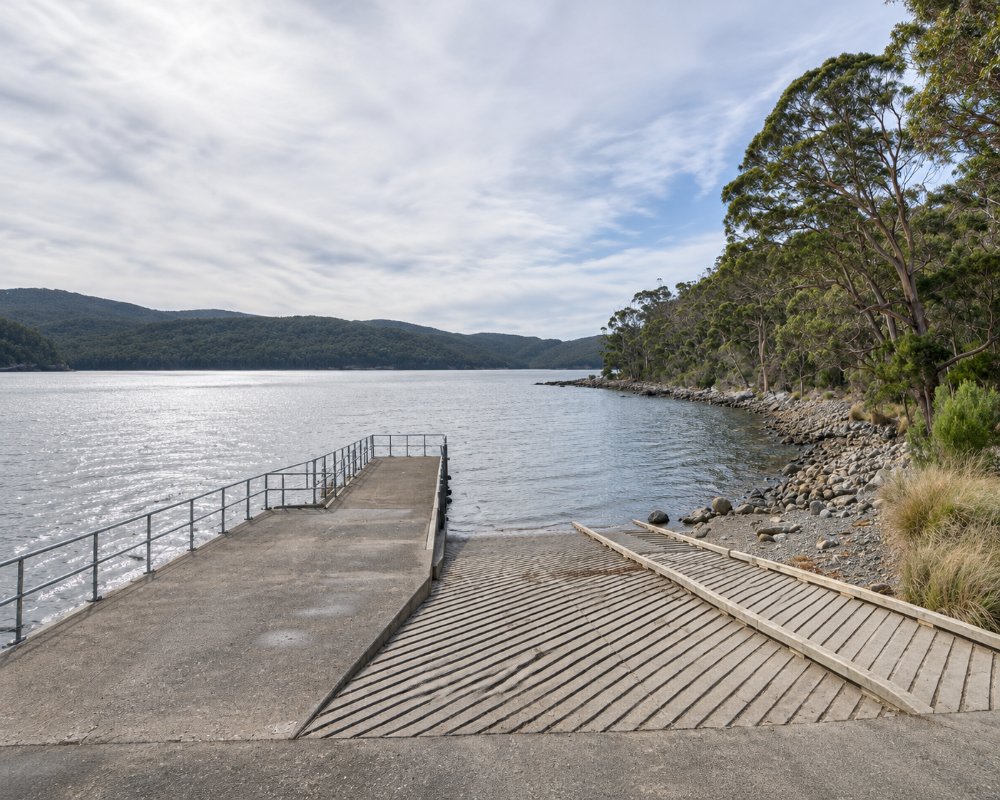
The bay is a deep notch in a coastline of cliffs, with a kilometre of beach at its head and wooded headlands on either side. A ranger station, a boat ramp and two camping areas sit behind the dunes. There is no settlement and no shop. The turn-off is on the Arthur Highway a few kilometres before Port Arthur, and the bay is 12 kilometres down an unsealed forestry road.
Fortescue Bay is a place for walkers, campers, divers and anyone who wants to wake up beside the sea in a national park.
Things To Do at Fortescue Bay
Cape Hauy
The track to Cape Hauy is the most accessible of the famous cape walks. It climbs from the bay through forest and heath and then follows a ridge out to the tip of the cape, about 9.4 kilometres and four hours return. The path is well built but includes more than a thousand stone steps each way. At the end, a fenced lookout gazes down on the Candlestick and the Totem Pole, slender dolerite pillars that are legendary among rock climbers, and across to the cliffs of Cape Pillar.
Three Capes Track
Fortescue Bay is the finishing point of the Three Capes Track, a four-day, 48-kilometre walk that begins with a boat trip from Port Arthur and crosses Cape Pillar and Cape Hauy, with nights in comfortable public huts. Numbers are limited and the walk must be booked ahead. Walkers emerging onto the beach here are collected by bus for the return to Port Arthur.
Canoe Bay and Bivouac Bay
A gentler walk follows the northern shore of the bay to Canoe Bay, where the rusting hull of a steel dredge, scuttled as a breakwater, lies in the shallows. It takes about two hours return. The track continues to Bivouac Bay, a secluded cove with a walkers’ camp site, and on along the coast towards Waterfall Bay and Eaglehawk Neck as the Tasman Coastal Trail.
The Beach and Bay
The beach is one of the loveliest on the peninsula, with fine white sand and clear, cold water protected from the open sea. It is safe for swimming on calm days and ideal for kayaking and stand-up paddleboarding. Little penguins nest around the bay, and wallabies, possums and quolls visit the camp ground at night.
Diving and Fishing
The waters off Fortescue Bay are known for giant kelp forests, sea caves and abundant marine life, including weedy sea dragons and seals. Dive operators at Eaglehawk Neck run trips along this coast. The boat ramp gives access to excellent fishing for flathead, squid, crayfish and, offshore, tuna in autumn.
Where To Stay
Accommodation at Fortescue Bay is camping only.
Bookings are required from 1 October to 30 April; outside those months sites are first come, first served. There are no powered sites and no dump point (the nearest are at Port Arthur and Nubeena), and generators may run at Mill Creek until 9 pm. From 3 November 2026 the fee becomes a flat $24 per site per night under a new Parks online booking system. The 12 kilometres of gravel can be very rough at times; take the blind corners slowly, as buses and vehicles towing boats use the road.
The national park camp ground has two areas. Banksia is close to the beach and suits tents and camper trailers, and Mill Creek, a little inland, takes caravans and motorhomes as well. Facilities include toilets, token-operated hot showers at Banksia, fireplaces and untreated tank water, and a ranger is on site. Sites must be booked in advance, especially for summer, Easter and long weekends, and a national parks pass is required.
Those who prefer a bed will find motels, cabins and lodges at Port Arthur and Taranna, about 30 minutes away, and holiday houses at Eaglehawk Neck.
Bookings open 180 days ahead, the maximum stay is 28 nights, and a same-day booking only counts once the rangers confirm it before 4 pm. The site fee covers up to six people, and the parks pass and camping fees can be paid at the site office or at the pay-and-display machine, which takes cards only. The office is staffed from mid-morning to late afternoon and sells ice and basic camping gear. Seasonal campfire bans began on 26 October 2026, so bring a fuel stove; the gas barbecues at the day-use shelter can still be used.
Firewood cannot be collected in the park. Banksia, under the stringybarks near the beach, is the better choice for tents, while Mill Creek has the larger sites for motorhomes and vehicles with boats. For a roof and a bed, Little Norfolk Bay Events and Chalets at Taranna, about 16 km away, has four spa chalets with full kitchens, and Stewarts Bay Lodge near Port Arthur, about 25 km away, has cabins and spa chalets with a restaurant. The NRMA Port Arthur Holiday Park, about 25 km away, has powered sites, cabins and a dump point.
Eat & Drink
There is nowhere to buy food at the bay, so bring all supplies. Firewood is sometimes sold by the ranger. The nearest shops are at Port Arthur and Nubeena.
After a walk, the cafes and chocolate maker at Taranna, the distillery near Port Arthur and the restaurants at Port Arthur are welcome stops.
There is no kiosk or cafe at Fortescue Bay; the site office sells only ice and basic camping supplies. The nearest meals are at Taranna, about 16 km away, where Little Norfolk Bay Bistro cooks local fish and the Tasmanian Chocolate Foundry sells chocolates and ice cream. Near Port Arthur, about 25 km away, the Port Arthur Lavender cafe at Long Bay serves lunch and lavender treats, and the Port Arthur General Store has takeaway food, grocery staples and fuel. For a full shop, Nubeena’s supermarket is about 45 minutes’ drive away.
History
The peninsula is the country of the Pydairrerme people. During the convict era, timber-getters from Port Arthur worked the forests behind the bay. In the early twentieth century a sawmill and a fish cannery operated here, served by a timber tramway whose route can still be traced. Boilers and other relics lie near the Mill Creek camp ground.
The forests around the bay were logged until the 1970s. Tasman National Park was declared in 1999, and the Three Capes Track opened in 2015, bringing many more walkers to the bay.
Getting to Fortescue Bay
From Hobart, follow the Tasman and Arthur highways through Sorell and Eaglehawk Neck. About four kilometres past Taranna, turn left onto Fortescue Road and follow the gravel for 12 kilometres. The drive takes about an hour and 45 minutes.
The gravel road is suitable for ordinary cars but can be corrugated. There is no public transport.
Experiences
- Caravan and Camping
- Nature based
- Self-Drive
- Soft Adventure
Popular Activities
- Bush Walking
- Caravan and Camping
- Diving
- Fishing
- Kayaking
- National Park
About Fortescue Bay
- Locality: Rural locality
- Fortescue Bay Postcode: 7182
- State: Tasmania
- Region: Hobart and South
- Latitude: -43.12696
- Longitude: 147.95007
- Elevation: 42m
- Timezone: Australia/Hobart
