
Dunwich, QLD
Dunwich is the gateway to North Stradbroke Island, the township on the sheltered western shore where the ferries from the mainland arrive. Most visitors drive straight through on their way to the surf, but Dunwich is the oldest settlement on the island and has a museum, a remarkable cemetery, calm swimming beaches and the nearest access to the island’s freshwater lakes.
Known For
- The island museum and historic Dunwich cemetery
- Brown Lake and Blue Lake
- Calm Moreton Bay beaches and Quandamooka culture
The township faces Moreton Bay across a foreshore of parks and jetties, with a small main street of shops a block back. Roads lead from here north to Amity Point, north-east to Point Lookout and east across the island to Main Beach. Dunwich is known as Goompi to the Quandamooka people, the traditional owners of the island.
It has a quiet, lived-in feel, and it is the service centre of the island, with the main supermarket, fuel, the Marie Rose Centre emergency clinic and the island’s only school.
Things To Do in Dunwich
North Stradbroke Island Museum
The island museum, a short walk from the ferry, is one of the best small museums in Queensland. Its displays cover Quandamooka life and culture, the convict outpost of the 1820s, the quarantine station, shipwrecks, the dugong and oyster industries and the long history of sand mining. Photographs and personal stories bring the island community to life.
Dunwich Cemetery
The cemetery on the foreshore dates from 1847 and is among the oldest in Queensland. It holds the graves of passengers and crew of an immigrant ship struck by typhus in 1850, and of thousands of residents of the benevolent asylum that operated in Dunwich for 80 years, most in unmarked plots. Interpretive signs explain its history, and the setting under old trees beside the bay is moving.
Brown Lake
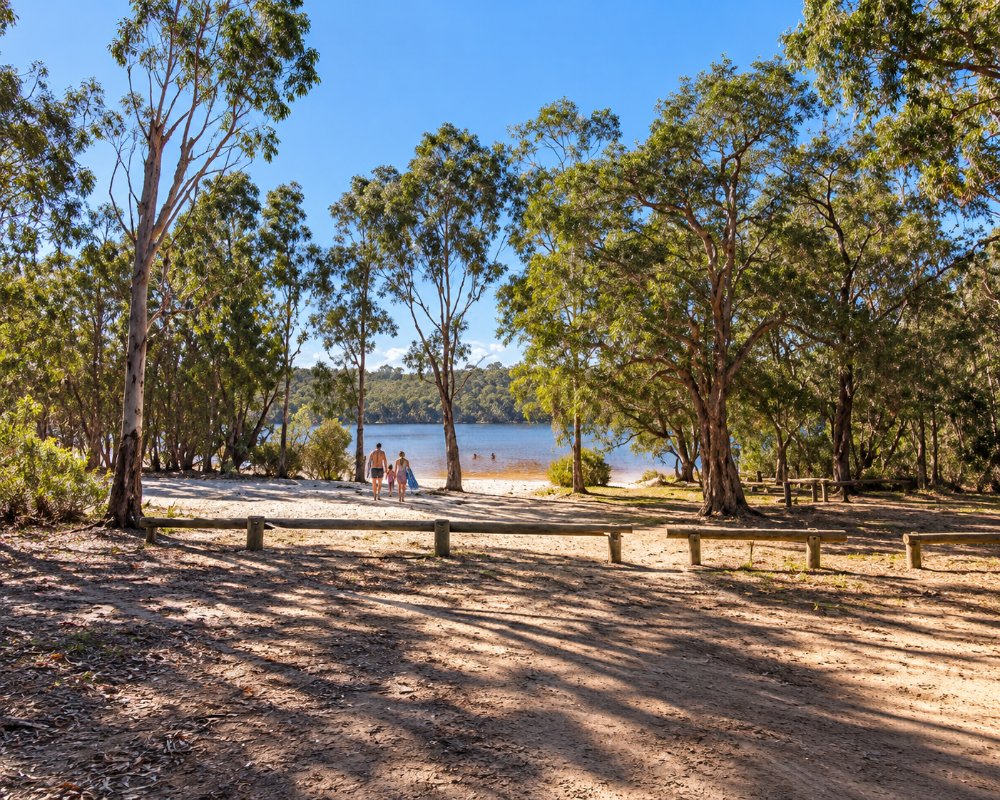
Four kilometres east of the township, Brown Lake, known as Bummiera, is a perched freshwater lake stained the colour of tea by the surrounding paperbarks. Its soft, warm water and white sand shore make it a favourite swimming and picnic spot for families. It is a place of cultural importance, and visitors are asked to treat it with respect.
Blue Lake and the National Park
Blue Lake, or Kaboora, lies within Naree Budjong Djara National Park in the centre of the island. A walking track of about five kilometres return leads through wallum heath and forest to the clear, deep lake, with wildflowers in spring and a good chance of seeing wallabies. Swimming is not encouraged, in keeping with the wishes of the traditional owners.
The Foreshore and Bay
The beaches at Dunwich are calm and shallow, suited to small children, kayaks and paddleboards. Dugongs, turtles and dolphins feed on the seagrass beds offshore. An old stone causeway built by convicts in 1827 survives near the ferry landing, and the foreshore parks have barbecues and playgrounds.
Quandamooka Art and Culture
Galleries and studios in the township show and sell work by Quandamooka artists, and cultural tours led by traditional owners explain bush foods, shell middens and stories of the island. The Quandamooka Festival, now held over a weekend each September at QUAMPI, features dance, music, weaving and whale-season celebrations.
QUAMPI Arts and Culture Centre
QUAMPI, the Quandamooka Arts and Culture Centre, opened in September 2025 on Ballow Road beside Deanbilla Bay. It is owned and run by the Quandamooka Yoolooburrabee Aboriginal Corporation and named after the quampi, a shellfish of the bay whose form shaped the building. Inside are exhibition and workshop spaces, a talking circle, an Elders’ space, a cafe and a gallery shop; the first exhibition brought together more than 40 artefacts and artworks, including pieces by the poet Oodgeroo Noonuccal. The centre is now the home of the Quandamooka Festival, and in 2026 it won the Award for Public Architecture at the Queensland Architecture Awards.
Straddie Oysters
Straddie Oysters farms native rock oysters in Moreton Bay and sells them from its oyster yard on Ballow Road in the middle of town. Visitors can meet the farmer, learn how the oysters are grown and how to shuck them, and book oyster farm tours that the business runs with a local tour partner.
Where To Stay
Dunwich has a small range of accommodation and is quieter and cheaper than Point Lookout.
Camp grounds on the bay at either end of the township offer powered and unpowered sites and eco tents beside calm water, and they are convenient for the ferry.
A few motels, cabins and holiday houses are available in and around the township, and a university research station occasionally hosts educational groups.
Most holidaymakers stay at Point Lookout, 20 kilometres away, or at Amity Point, and visit Dunwich for the museum, the lakes and supplies.
Bradbury’s Beach camping ground, on Flinders Avenue about 1 km from the ferry terminal and a short walk from the One Mile jetty, is set up for caravans and camper trailers rather than tents. It has 21 powered sites, four of them large drive-through sites, and six Eco Island tents with their own ensuite and kitchenette. Adams Beach camping ground, on Ballow Road within walking distance of the ferry and the shops, has powered and unpowered sites for tents and vans, including five on the waterfront; check it is taking bookings before you plan around it.
Both have hot showers and a coin laundry, but dogs, generators and open fires are not allowed. Dunwich Apartments on Cunningham Street, formerly Minjerribah Island Accommodation, has been renovated under new management and takes holidaymakers, workers and groups of up to 110. For something different, Straddie Brewing Co on Junner Street has a “Beer n Bed” room reached through a hidden doorway on its rooftop. Holiday houses are let through island agents. Fuel is sold at the Dunwich service station, about 100 metres from the ferry terminal, but there are no LPG pumps on the island.
Eat & Drink
Dunwich has cafes, a bakery, a fruit and vegetable shop with good coffee and juices, takeaway fish and chips and a sports club with a bistro. Opening hours are geared to ferry times and locals, so evening options are limited.
The supermarket is the largest on the island and the best place to stock up before heading to a holiday house. Picnic tables on the foreshore make a pleasant spot for lunch while waiting for a ferry.
Straddie Brewing Co, which opened on Junner Street in October 2022, is a three-storey brewhouse with a restaurant serving island seafood and Queensland produce, a rooftop bar with cocktails and tapas over Moreton Bay, and brewery tours three times a week. Its core beers are named after island places, from Point Lookout Lager to Amity Pale Ale and Myora Springs Gose. The Little Ship Club on Yabby Street, founded in 1951, has a waterfront bistro and garden bar over the One Mile anchorage, known for seafood boards and crumbed whiting, with live music on most Saturdays.
Perry’s Seafood on Stradbroke Place is a fishing family’s shop selling fish and chips, burgers, salads, coffee and seafood they catch and clean themselves, a short drive from the vehicle ferry. The QUAMPI centre on Ballow Road has its own cafe, and St Stradbroke Wine Bar and Cellar Door, also on Ballow Road, pours wines from family producers. For self-caterers, Stradbroke Island Foodworks on Stradbroke Place is the island’s largest supermarket, and the town also has a Spar Express and a butcher.
History
The Quandamooka people have lived on Minjerribah for more than 20,000 years, and Dunwich remains the centre of their community. In 1827 the colonial government set up a depot here to transfer cargo from ships to smaller boats bound for the Brisbane River, building the causeway that still stands.
A Catholic mission, a quarantine station and, from 1865 to 1946, a large asylum for the aged and destitute followed. Sand mining began after the Second World War and dominated the island economy until it ended in 2019.
Getting to Dunwich
Vehicle ferries and passenger water taxis cross from Toondah Harbour at Cleveland to Dunwich many times a day, taking 25 to 50 minutes. Cleveland is the end of a suburban railway line from Brisbane, about an hour from the city, with a bus link to the harbour.
Island buses meet most ferries and run to Point Lookout and Amity Point. Vehicle ferry bookings are essential at holiday times.
Experiences
- Historic/Heritage
- Island
- Nature based
- Relaxation
Popular Activities
- Bush Walking
- Caravan and Camping
- Fishing
- Food and Wine
- Kayaking
- National Park
- Sightseeing
- Swimming
About Dunwich
- Locality: Urban locality
- Dunwich Postcode: 4183
- State: Queensland
- Region: Brisbane
- Latitude: -27.49927
- Longitude: 153.40238
- Elevation: 9m
- Timezone: Australia/Brisbane
