
Coombabah, QLD
Coombabah is a residential suburb on the northern Gold Coast, between Helensvale and Runaway Bay. Its attraction for visitors is the Coombabah Lakelands Conservation Area, a large reserve of wetland, eucalypt forest and mangrove where kangaroos graze in the open and koalas sleep in the trees, all within a few minutes of the motorway and the theme parks.
Known For
- Coombabah Lakelands Conservation Area
- Wild kangaroos, wallabies and koalas
- Boardwalks and bird hides on Coombabah Lake
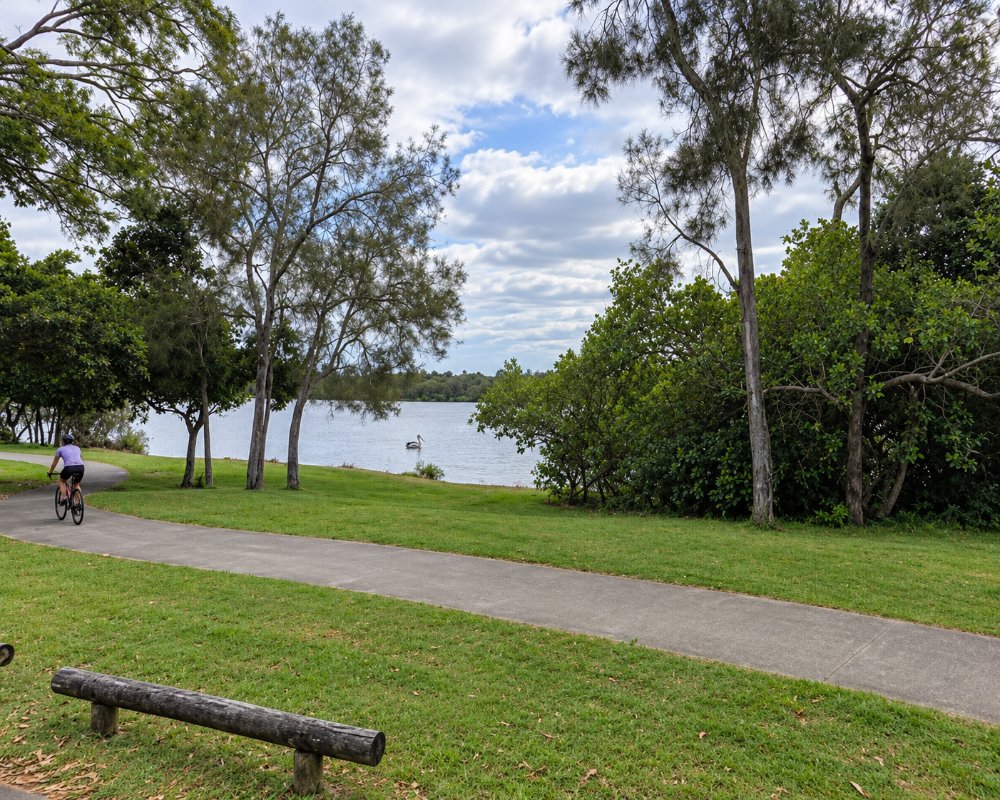
The suburb wraps around the eastern and southern sides of Coombabah Lake, a shallow tidal lake fed by Coombabah Creek, which drains to the Broadwater at Paradise Point. Housing estates and retirement villages cover the higher ground, and the lake shore and creek flats are protected.
Few tourists know about the lakelands, yet it is one of the most reliable places in south-east Queensland to see native animals in the wild, and it costs nothing to visit.
Things To Do in Coombabah
Coombabah Lakelands Conservation Area
The reserve covers about 1,200 hectares and is part of the internationally recognised Moreton Bay wetlands. More than 16 kilometres of flat walking tracks and boardwalks lead through open forest, paperbark swamp, salt marsh and mangroves. The main entrances are at Rain Tree Glen and Shelter Road, both with car parks and information boards. Tracks are graded easy, and many are suitable for prams and wheelchairs. Take water, a hat and insect repellent, as mosquitoes can be fierce near the mangroves.
Kangaroos and Koalas
A large mob of eastern grey kangaroos lives in the reserve, and they are almost always visible on the grassy clearings near the Rain Tree Glen entrance, especially early in the morning and late in the afternoon. Red-necked and swamp wallabies keep to the forest edges. The reserve also supports an important koala population, so look for them in the forks of the eucalypts along the tracks. Keep your distance from the animals, do not feed them, and leave dogs at home.
Birdwatching
More than 200 bird species have been recorded here. A bird hide on the mangrove boardwalk looks over the tidal flats of the lake, where migratory shorebirds from as far away as Siberia feed between September and April. Year-round residents include sea eagles, ospreys, kingfishers, spoonbills and black swans.
Paddling and Fishing
Coombabah Creek is a quiet waterway for kayaks and canoes, winding through mangroves from the lake to the Broadwater. It is best paddled around high tide. The creek holds bream, flathead and mud crabs, though parts of the lake are closed to fishing as a fish habitat area, so check the signs.
Cycling
Shared paths link the lakelands with Helensvale, Arundel and the Broadwater foreshore, making it possible to combine a wildlife walk with a ride to Labrador or Paradise Point.
Where To Stay
Coombabah has very little visitor accommodation of its own, but plenty lies within a ten-minute drive.
The holiday parks at Helensvale and Biggera Waters, with cabins, villas and powered sites, are the nearest family options and are well placed for both the lakelands and the theme parks.
Waterfront apartments at Runaway Bay, Paradise Point and Biggera Waters suit couples and longer stays, and the resort at Sanctuary Cove on Hope Island is the closest luxury hotel. Motels near Harbour Town cater to short stops.
Because the kangaroos are most active at dawn and dusk, staying nearby makes it easy to visit at the best times.
For caravans and families, BIG4 Gold Coast Holiday Park and Motel at Helensvale, about 6 km west, has powered and ensuite sites, cabins, villas and motel rooms, with a water park, a giant jumping pillow and dog-friendly sites. NRMA Treasure Island Holiday Resort on Brisbane Road at Biggera Waters, about 5 km south-east, has premium powered sites that take vans of up to about 28 feet, safari tents and a long list of villas, plus the Shipwreck Shores water park, four pools and pirate-themed mini golf. Both fill quickly in school holidays, so book ahead.
The council-run Broadwater Tourist Park at Southport, about 12 km south, has more than 200 powered sites and waterfront cabins on the Broadwater, about a kilometre from the light rail.
For a resort stay, the InterContinental Sanctuary Cove Resort is about 10 km north on Hope Island. Closer to the water, The Grand Apartments and Blue Waters Apartments on Marine Parade at Labrador, about 8 km south, have self-contained units facing the Broadwater. Sports and school groups can book lodge rooms with catering at the Gold Coast Performance Centre in Runaway Bay, about 4 km east.
Eat & Drink
There are no cafes inside the reserve, so bring water and snacks. Picnic tables are provided near the main entrances.
Coombabah has a couple of small shopping centres with bakeries, cafes and takeaway shops, and a tavern serving pub meals. For more choice, Harbour Town at Biggera Waters is five minutes away with dozens of eateries, and the esplanade at Paradise Point, ten minutes north, is the pick for breakfast or dinner by the water.
There are no toilets or drinking water inside the conservation area, so fill your bottles before you set out and plan a meal for after the walk.
The nearest pub is the Runaway Bay Tavern on Lae Drive, about 3 km east, which finished a two-stage refit in 2026 with a bright new bistro, a beer garden and terrace, and a playground; it serves pub classics, seafood and family meals, with sport on a big screen. On Pine Ridge Road at Biggera Waters, about 3 km away, Black Hops runs a brewery taproom pouring its own beers, with brewery tours. Hound and Stag Brewing Co at Arundel, about 5 km south-west, is one of the largest taprooms on the northern Gold Coast, with food, live music and a dog-friendly outdoor area.
For breakfast by the water, the Esplanade at Paradise Point has Burleigh Baker for sourdough, sausage rolls and almond croissants, and Cafe 7 for all-day breakfast and high tea.
Runaway Bay Centre and Harbour Town both have supermarkets, food courts and bakeries, and fuel is easy to find on the main roads.
History
Coombabah is in the country of the Kombumerri people of the Yugambeh language region, and the lake and creek were important sources of fish, shellfish and waterbirds. Middens and other cultural sites remain within the reserve. The name comes from the Yugambeh language.
European settlers used the area for timber, grazing and oystering. As housing spread north in the 1980s, the Gold Coast council began buying land around the lake to protect it, and the conservation area was established in the 1990s. It is now one of the largest reserves of its kind within any Australian city.
Getting to Coombabah
Coombabah is about 65 kilometres from Brisbane. Leave the Pacific Motorway at Helensvale and follow Helensvale Road and Oxley Drive; the Rain Tree Glen entrance is about ten minutes from the exit. Helensvale station, served by trains from Brisbane and by the light rail from Southport and Surfers Paradise, is four kilometres away, with local buses passing near the reserve.
Gold Coast Airport is about 38 kilometres south. Parking at the entrances is free, and the gates to some car parks are locked at night.
Experiences
- City
- Nature based
- Relaxation
Popular Activities
- Bird Watching
- Bush Walking
- Cycling
- Fishing
- Kayaking
- Wildlife
About Coombabah
- Locality: Suburb
- Coombabah Postcode: 4216
- State: Queensland
- Region: Gold Coast
- Latitude: -27.89880
- Longitude: 153.37753
- Elevation: 6m
- Timezone: Australia/Brisbane
