
Caulfield, VIC
Caulfield is a large, comfortable residential district ten kilometres south-east of the centre of Melbourne. Its name is familiar across the country because of its racecourse, where the Caulfield Cup, one of the great races of the Australian spring, has been run since 1879. Beyond the track it has one of the most extraordinary mansions in the city, a fine Victorian park, a university campus and, in its northern streets, the heart of Jewish Melbourne.
Known For
- Caulfield Racecourse and the Caulfield Cup
- Labassa, a lavish National Trust mansion
- Caulfield Park and a thriving Jewish community
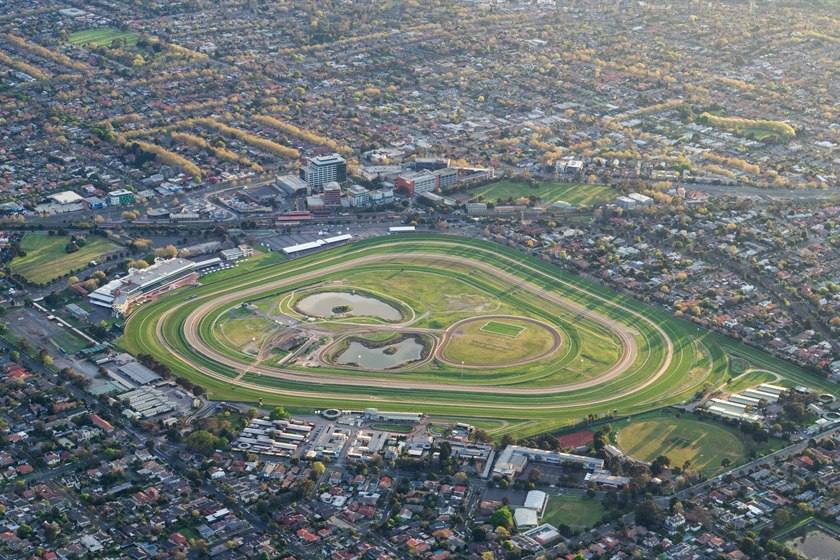
Caulfield is really a group of neighbourhoods, north, south and east, spread around the racecourse and linked by tram lines. It is solidly suburban, with streets of Edwardian and interwar houses, good schools and neighbourhood shopping strips. Visitors generally come for a specific reason, most often a day at the races or an open day at Labassa.
It is twenty minutes by train from the centre of Melbourne, and a visit can be combined with nearby Elsternwick and the gardens of Rippon Lea.
History and Heritage
Caulfield lies on the Country of the Bunurong people of the Kulin Nation. Much of it was originally heath and swamp, crossed by tracks leading from the bay to the hills.
The Heath
European settlers took up land from the 1840s for grazing and market gardens. The origin of the name is uncertain. A local government body was formed in 1857, one of the first in the colony. On a sandy stretch of heathland in the middle of the district, locals began holding informal horse races, and in 1859 a proper course was laid out. Racing people still call the track the Heath.
The Cup
The Victoria Amateur Turf Club made Caulfield its home in the 1870s and ran the first Caulfield Cup in 1879. The race, a handicap over 2,400 metres held in mid October, became the traditional lead-up to the Melbourne Cup, and winning both in the same year is one of the rarest feats in Australian racing. The course has seen triumph and tragedy, including a notorious fall in the 1885 Cup involving more than a dozen horses, and a fire in the 1920s that destroyed the members’ stand.
Boom Mansions
The arrival of the railway in 1879 brought wealthy residents, and in the 1880s a number of very large houses were built on the higher ground to the north. The most spectacular was Labassa, remodelled in 1890 for a millionaire coach line owner in a French-inspired style of astonishing richness. When its owners fell on hard times it was divided into flats, which in the twentieth century were home to artists, actors and bohemians. The National Trust rescued it in 1980.
War and Community
During the First World War a large military hospital operated in Caulfield, treating thousands of wounded soldiers, and the racecourse was used as a camp in both world wars. From the 1920s, and especially after 1945, Jewish families moved into the area, many of them refugees and survivors from Europe, and built the synagogues, schools and institutions that make it the centre of the community today.
Attractions in Caulfield
The main points of interest are some distance apart, so allow for a tram ride or a drive between them.
Caulfield Racecourse
The course hosts around twenty-five race meetings a year. The Caulfield Cup Carnival in October is the high point, with three days of top-class racing, fashion and entertainment. Outside the carnival, race days are relaxed and affordable, and a number of twilight and night meetings are held in summer. The track is unusual in having a public reserve in its centre, with walking paths and a lake that anyone may use when racing is not on.
Labassa
This thirty-five room mansion in Caulfield North is one of the most lavishly decorated nineteenth century houses in Australia. Its interiors include gilded embossed wallpapers, ornate stained glass, a painted ceiling that tricks the eye into seeing sky and balustrades, and a grand staircase. Much of the original decoration survives intact. The house is open to the public on the third Sunday of most months, with bookings essential and volunteer guides who also tell the stories of the colourful tenants of its years as flats.
Caulfield Park
Set aside in the 1860s, this large park has an ornamental lake, a conservatory, formal gardens, avenues of old trees and extensive sports fields. It is a well-loved green space and a good place for a walk or a picnic.
Glen Eira Town Hall and Gallery
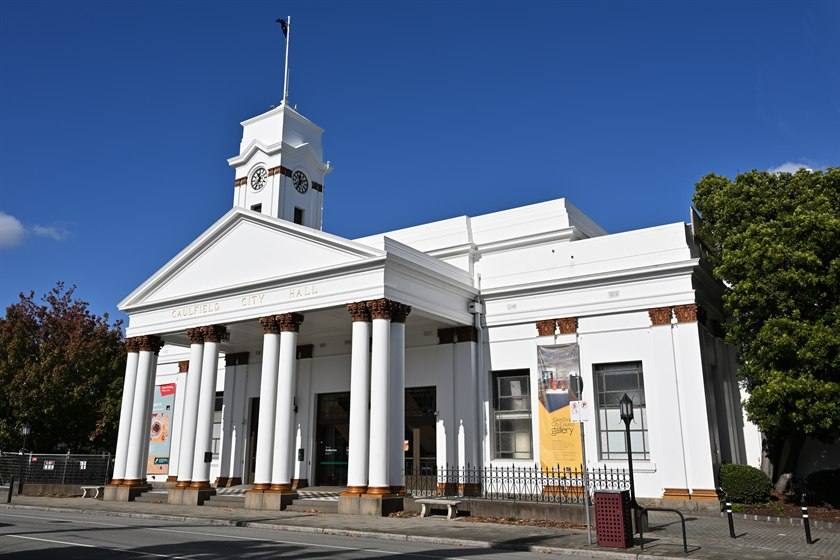
The former Caulfield Town Hall, a boom-era building with a clock tower, houses the local council and a public gallery with a regular program of exhibitions.
Jewish Caulfield
The streets of Caulfield North and neighbouring St Kilda East hold many synagogues, Jewish schools, kosher butchers, bakeries and grocers. On Friday afternoons the bakeries are busy with families buying challah, and on Saturdays the footpaths fill with people walking to services.
Caulfield Commons
The open land in the middle of the racecourse is a public park, Caulfield Commons, managed by the Caulfield Racecourse Reserve Trust. It is open from sunrise to sunset except on race days, when it closes, often for a day or two beforehand as well. A long-term plan aims to open more of the reserve to the public, with paths, wetlands and recreation space alongside the racing.
Where To Stay
Caulfield has little visitor accommodation.
There are a few motels and apartment hotels along Dandenong Road and near the racecourse and university, which are busiest during the spring carnival.
St Kilda, fifteen minutes away by tram, has far more choice, as does the city.
The Sebel Melbourne Malvern, an apartment-style hotel at 803 Dandenong Road in Malvern East, is a few minutes’ drive north of the racecourse and suits families and racegoers who want a kitchen. Hotel Chadstone Melbourne, the MGallery hotel attached to the Chadstone shopping centre, is about 6 km east and is the most upmarket choice nearby. To the south, The Sebel Melbourne Moorabbin at 6 Station Street, about 6 km away, sits beside Moorabbin station on the Frankston line, which also stops at Caulfield.
Rooms close to the course fill early for the October carnival, so book well ahead for Caulfield Cup week. Holiday rentals in the flats of Caulfield North and around Caulfield Park are another option for longer stays. There are no caravan parks in this part of the city; the nearest is BIG4 Dandenong Tourist Park in Dandenong South, about 20 km south-east, and parking a van in the narrow streets of Caulfield North is difficult.
Eat & Drink
Caulfield’s shopping strips each have their own flavour.
The area is known for its Jewish bakeries and delicatessens, selling bagels, rye bread, pastries, pickles and smoked fish, and for cafes serving Israeli-style breakfasts. Glen Huntly Road and Hawthorn Road have a broad range of restaurants.
A short distance east, Koornang Road in Carnegie has become one of the best streets in Melbourne for dumplings, Korean food and other Asian cuisines. On race days the course offers everything from casual food stalls to formal dining.
Venues change, so check before making a special trip.
Hawthorn Road in Caulfield North is the centre of the Jewish food scene. Baker Bleu at 121 Hawthorn Road bakes long-fermented sourdough, croissants and sandwiches, with challah on Fridays. Morish serves Israeli food such as schnitzel pitas, shakshuka and kebabs, and The Pita Man, which is kosher-supervised and closed on Saturdays, fills fresh pita with falafel and sabich. Lenny’s Fine Food Deli, on Inkerman Road at Orrong Crescent, is the place for bagels, brisket, latkes and chicken soup, and Little Sister Bakery at 93 Orrong Crescent bakes Jewish breads and pastries with Middle Eastern flavours.
For dinner, Banksia, across Hawthorn Road from Caulfield Park, serves modern Australian food from a shared-table menu, and Ruzia’s Wine on Balaclava Road pairs Eastern European-inspired plates and house pickles with Australian wines. In Caulfield South, Danish Nosh at 983 Glen Huntly Road is a bakery and cafe for cakes and pastries. Supermarkets are on Glen Huntly and Hawthorn roads, and fuel is on Dandenong Road and the Nepean Highway.
Getting to Caulfield
Caulfield Station, beside the racecourse and the university, is served by the Frankston line and by trains to the south-eastern suburbs. The trip from the city takes about twenty minutes.
Trams run from the city along St Kilda Road and Balaclava Road to Caulfield North and the racecourse, and along Glen Huntly Road and Hawthorn Road.
By car, follow Dandenong Road from the city. Parking is available at the racecourse on race days.
Experiences
- City
- Cultural
- Historic/Heritage
- Relaxation
Popular Activities
- City Sightseeing
- Cycling
- Food and Wine
- Shopping
