
Point Cook, VIC
Point Cook is one of the fastest growing suburbs in Australia, a spread of new housing estates on the flat western shore of Port Phillip, twenty-five kilometres south-west of the centre of Melbourne. Visitors come for what lies between the houses and the sea: the oldest continuously operating military airfield in the world, with a superb free aviation museum, a bluestone homestead from the 1850s, and a long sweep of coastal park and wetland that is one of the best places for birdwatching near the city.
Known For
- The RAAF Museum, at the birthplace of Australian military aviation
- Point Cook Homestead and Coastal Park
- Wetlands, shorebirds and a marine sanctuary

Thirty years ago this was open farmland. Today more than sixty thousand people live here, and the suburb has its own town centre, lakes and a golf course. The coast, however, has been kept free of development, and standing on the beach near the homestead, with only grassland and sky behind you, it is easy to imagine the place as it was.
Point Cook is best reached by car, about half an hour from central Melbourne, and it pairs well with a visit to the mansion, zoo and rose garden at nearby Werribee.
History and Heritage
Point Cook lies on the Country of the Bunurong people of the Kulin Nation. The shallow bay, the salt marshes and the grassy plains behind supported a rich supply of fish, shellfish, birds and game.
The point was named in 1836 by the officers of a survey ship charting Port Phillip, after one of their number, John Cooke. The final letter was dropped over time.
The Chirnsides
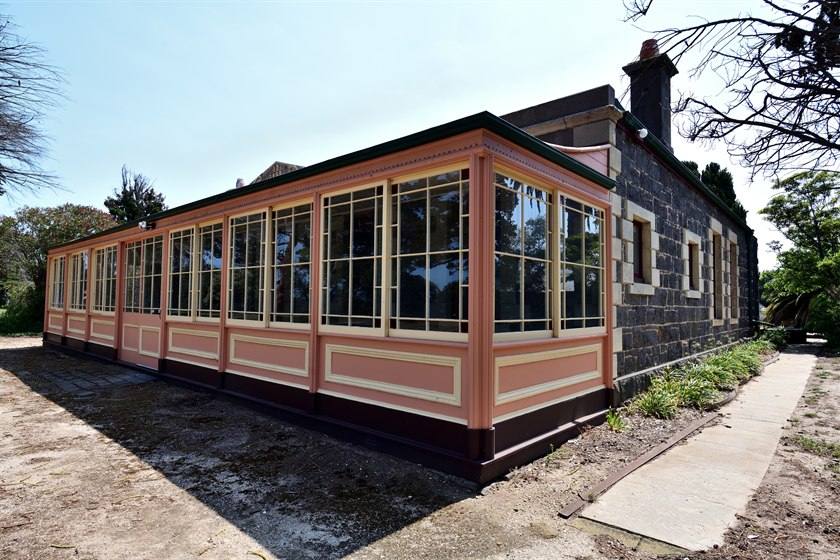
In the 1850s the land was acquired by Thomas Chirnside, a Scottish settler who, with his brother, built one of the great pastoral empires of the colony. He built a bluestone homestead and stables close to the shore in 1857 and used the property for breeding and training racehorses and for hunting parties. The family later built the far grander Werribee Park mansion a few kilometres away, and the Point Cook homestead became an outstation.
The Birth of an Air Force
In 1912 the Australian government decided to establish a military flying school, and chose a stretch of the Chirnside land at Point Cook for its flat ground and nearness to the bay, which allowed seaplanes to be used as well. The first flight took place on 1 March 1914, in a flimsy biplane of wood, wire and fabric. Pilots trained here served in the First World War, and when the Royal Australian Air Force was formed in 1921, the second independent air force in the world, Point Cook was its first and for many years its only base. Generations of pilots learned to fly here.
Salt and Suburbs
A saltworks operated on the coast to the east from the 1920s, evaporating seawater in shallow pans. When it closed in the 1990s the lagoons were kept as a wildlife reserve. Residential development began around the same time and has continued at a remarkable pace.
Attractions in Point Cook
The museum and the coastal park are at opposite ends of the same stretch of shore.
RAAF Museum
The museum occupies several hangars on the working air base and tells the story of Australian military aviation from 1914 to the present. Its collection of more than thirty aircraft includes fragile training machines from the First World War, fighters and bombers from the Second, and early jets and helicopters, most of them on static display in the hangars. On certain days of the week, one of the historic aircraft is flown in a display over the airfield, with a commentary from the pilot. Entry is free, but the museum opens only on set days, mostly Thursdays and Sundays, visits must be booked ahead online, and as it is inside a defence base, visitors over 16 need to show photo identification at the gate.
The Historic Airfield
The base itself is of national heritage significance. Many of its early buildings survive, including timber hangars and seaplane facilities from the years around the First World War, and the layout of the original airfield is still clear.
Point Cook Homestead
The Chirnside homestead stands among old trees a short walk from the beach, with its stone stables and outbuildings. The buildings can be viewed from outside, and the surrounding lawns make a lovely picnic spot.
Point Cook Coastal Park
The park protects several kilometres of shoreline, with sandy beaches, dunes, salt marsh, grassland and freshwater lakes. Walking tracks and a bird hide give views over the wetlands, where swans, pelicans, spoonbills and many kinds of ducks and waders can be seen. Offshore, a marine sanctuary covers a shallow basalt reef that is good for snorkelling in calm weather.
Cheetham Wetlands
The former salt pans, immediately east of the park, attract huge numbers of migratory shorebirds in summer. An observation tower stands at the edge of the lagoons.
Sanctuary Lakes
In the middle of the suburb, a large artificial lake is surrounded by housing, a shopping centre and an eighteen-hole golf course designed by the champion golfer Greg Norman, which is open to the public.
Where To Stay
Point Cook has a few apartment hotels around its town centre and lake.
These are modern and practical, and useful for anyone visiting family in the area.
For a more memorable stay, the hotel in the grounds of Werribee Park mansion is ten minutes away, and the city is half an hour by freeway.
The serviced apartments at Quest Sanctuary Lakes sit inside the Sanctuary Lakes resort, beside the Greg Norman golf course and a short drive from the coastal park, and suit families and longer stays. On Point Cook Road, Seasons 5 Resort and Spa has 38 rooms, from studios to one- and two-bedroom villas with spa baths, along with a day spa and its own restaurant. The Lancemore Mansion Hotel at Werribee Park, with its day spa and Joseph’s restaurant, is the choice for a special weekend, and Werribee itself has motels, the Holiday Inn Werribee and Quest Werribee, about 15 km west.
There is no camping in Point Cook Coastal Park, and dogs are not allowed in the park. For caravans, the nearest park is the council-owned Werribee South Tourist Park in Beach Road, about 15 km south-west, which has grassed powered sites up to 15 metres long, cabins and a dump point; the drive from Point Cook is all on flat main roads.
Eat & Drink
The town centre and the shops at Sanctuary Lakes have a wide range of cafes and restaurants, reflecting the many cultures of the people who have moved here, with Indian, Chinese, Vietnamese and Middle Eastern food particularly well represented.
There is nowhere to eat at the coastal park, so bring a picnic. The museum has no cafe or kiosk, though there is a covered picnic area.
Venues change, so check before making a special trip.
The best spread of cafes is around the Point Cook Town Centre. Little Espresso, in Main Street, does breakfast, acai bowls and turmeric and beetroot lattes, and Bean Smuggler in Sneydes Road is a dog-friendly brunch cafe with a big outdoor area and dishes such as miso salmon and rice porridge. At the Sanctuary Lakes Shopping Centre, Wolf Cafe and Eatery serves all-day brunch, bao buns and tacos, and the Greg Norman Bar and Restaurant is in the Sanctuary Lakes golf clubhouse. For dinner, Rococo in Wallace Avenue, near Williams Landing station, does Neapolitan pizza and handmade pasta, Momo and Chillies at the Featherbrook shops specialises in Nepalese dumplings and Indo-Chinese dishes, and Cinnamon Bay at Seasons 5 serves modern Australian food with Asian flavours.
Hopheads in Adelphi Boulevard is a craft-beer bar and bottle shop where you can bring takeaway food, and Lovesick in Kenswick Street is a late-night cocktail and wine bar with share plates. Stockland Point Cook and Sanctuary Lakes have supermarkets, and fuel is easy to find on Point Cook Road.
Getting to Point Cook
By car, take the West Gate Freeway and Princes Freeway from the city and exit at Point Cook Road. The RAAF Museum is at the southern end of that road, and the coastal park and homestead are reached from Point Cook Homestead Road.
By public transport, catch a Werribee line train to Williams Landing or Laverton and change to a local bus. There is no public transport onto the RAAF base, buses to the coast are limited, and a car is strongly recommended.
Cyclists can follow the Bay Trail from Altona, which runs past the wetlands to the edge of the coastal park.
Experiences
- City
- Cultural
- Historic/Heritage
- Nature based
- Self-Drive
Popular Activities
- Beach
- Bird Watching
- Bush Walking
- Cycling
- Golfing
- Sightseeing
- Snorkelling
