
Brighton, VIC
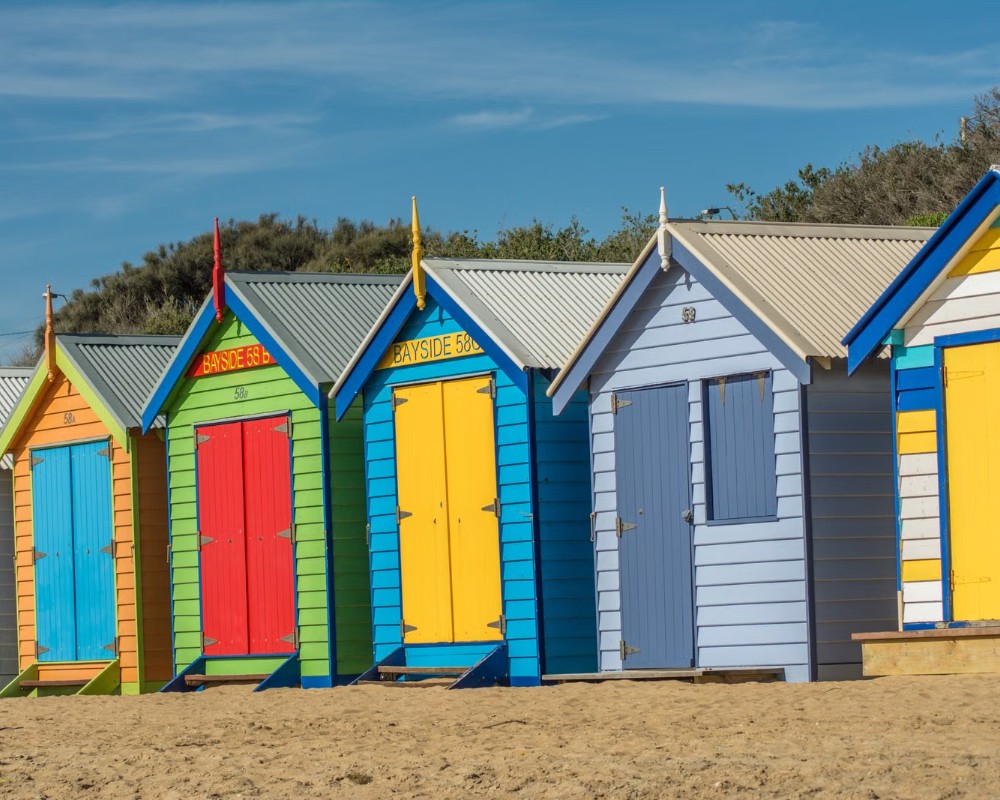
Brighton is the best known of Melbourne’s bayside suburbs, eleven kilometres south of the city centre on the shore of Port Phillip. It is wealthy, leafy and proud of it, with large houses behind high hedges and a long sandy beach. It is also home to one of the most photographed sights in Australia: a row of brightly painted timber bathing boxes lined up along the sand, with the city skyline rising across the water behind them.
Known For
- The colourful bathing boxes of Dendy Street Beach
- Middle Brighton Baths, one of the last open-air sea baths in Australia
- Church Street shopping, grand houses and the Bay Trail
Brighton has been a seaside retreat since the 1840s, and it still has the feel of a resort town that happens to be part of a big city. The beaches face west across the bay, the water is calm and shallow, and on warm evenings half the suburb seems to be on the sand watching the sun go down.
It is an easy half-day trip from central Melbourne, twenty minutes by train, and combines well with a walk or ride along the foreshore to St Kilda.
History and Heritage
Brighton lies on the Country of the Bunurong people of the Kulin Nation, who lived along this coast for thousands of years. Shell middens and freshwater wells in the cliffs to the south are reminders of that long occupation.
Dendy’s Special Survey
In 1841 an English farmer named Henry Dendy arrived in Melbourne with a document entitling him to select eight square miles of land for one pound an acre, under a short-lived scheme known as a special survey. He chose the coast south of the town, and his agent laid out a settlement with sweeping crescents, a village green and wide streets, a plan that can still be seen on the map. Dendy named it after the English resort. An economic slump ruined him within a few years, and he died poor, but his town survived.
A Fashionable Resort
The railway reached Brighton in 1859, bringing day trippers from the city and allowing wealthy families to live by the sea all year round. Mansions rose along the Esplanade and on the higher ground inland. Sea bathing became popular, and since Victorian modesty demanded somewhere private to change, bathing boxes were built along the shore from the 1860s onward.
The Baths
Public sea baths, fenced off from the open water for safety and decency, opened at Middle Brighton in 1881. Most such baths around the bay were later destroyed by storms or demolished, but Brighton’s have survived and are still in daily use.
Attractions in Brighton
Head for the beach first, then explore the streets behind it.
The Bathing Boxes
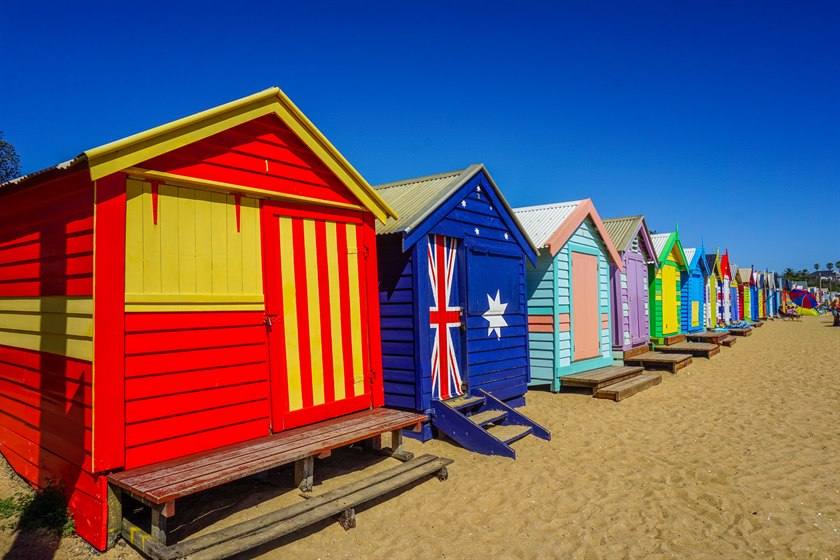
More than ninety bathing boxes stand in a row on Dendy Street Beach. They are all built to the same simple pattern, with timber frames, weatherboard walls and corrugated iron roofs, and have no electricity or running water. What makes them famous is their paintwork: each owner decorates the front differently, with stripes, flags, waves and cartoon characters in every colour. They are privately owned, can only be bought by local ratepayers, and change hands for extraordinary sums. Come early in the morning or late in the afternoon for the best light and the fewest people.
Middle Brighton Baths
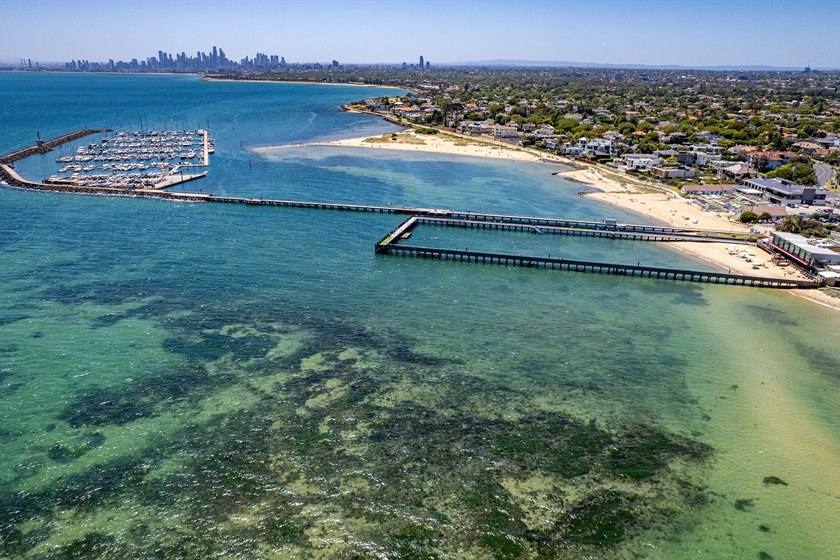
A short walk north along the beach, the baths enclose a stretch of sea with a timber boardwalk. A hardy group of locals swims here every morning of the year, whatever the temperature. The 1930s pavilion houses a cafe, a fish and chip kiosk, an events space and a gym, and casual swimmers are welcome. A long pier beside the baths shelters the yacht club marina.
Beaches and the Bay Trail
Brighton has several kilometres of beach, backed by lawns and tea-tree. The Bay Trail, a shared path for walkers and cyclists, runs the full length of the foreshore and continues north to Elwood, St Kilda and the city, and south towards Sandringham and beyond. Green Point, between the baths and the bathing boxes, has a good view of the skyline.
Church Street and Bay Street
Church Street, a few blocks inland near Middle Brighton Station, is the main shopping street, with fashion boutiques, homewares, bookshops and cafes. Bay Street, further north, has a cinema and a more everyday mix of shops and restaurants.
Billilla
This mansion, set in large formal gardens on Halifax Street, was built in 1878 and remodelled around 1907 with some of the finest Art Nouveau interiors in Australia. The gardens are open daily and the house can be visited on open days.
The Golden Mile
The stretch of the Esplanade and the streets immediately behind it hold some of the most expensive houses in Melbourne, a mixture of Victorian mansions and very large modern homes. It makes for an interesting walk or drive.
Where To Stay
Brighton has a small number of hotels and is a peaceful alternative to staying in the city.
The Brighton Savoy, for decades the landmark hotel on the Esplanade opposite the bathing boxes, was demolished in 2025 to make way for apartments. There are also apartment hotels near the beach and the shopping streets.
A much larger choice of accommodation is available in St Kilda, fifteen minutes away.
Quest Brighton on the Bay, at 250 Esplanade, is the main place to stay on the beachfront. It is a serviced apartment hotel across the road from Brighton Beach and the Royal Brighton Yacht Club, a short walk from Middle Brighton Baths, the pier and Church Street, and its apartments suit families and longer stays because you can cook for yourself.
The Sandringham Hotel, about 6 km south along Beach Road, has 10 en suite rooms above the pub, with a continental breakfast, opposite Sandringham Beach and 200 metres from Sandringham station. Inland, Quest Moorabbin, at 3 Kingston Road in Heatherton, about 11 km south-east, has around 60 serviced apartments and is handy for drivers using the Nepean Highway or visiting Southland.
Short-stay apartments and houses are also let through the usual holiday rental sites, many of them within walking distance of the beach.
Street parking near the foreshore is time-limited, so ask about parking when you book. There is no caravan park in the bayside suburbs. The nearest is BIG4 Melbourne Holiday Park at 265 Elizabeth Street, Coburg, about 20 km north.
Eat & Drink
The Baths Middle Brighton has the best setting in the suburb, with a cafe and a fish and chip kiosk at beach level and an events space upstairs, all looking over the water to the city.
Church Street is lined with cafes and restaurants, among them The Pantry, a local institution that has been serving breakfast and lunch since the mid-1990s. The Half Moon is a large and popular pub with a courtyard, and Bay Street has a good range of casual Italian, Japanese and Thai places.
For a simple meal, buy fish and chips and eat them on the beach. Venues change, so check before making a special trip.
The Baths’ downstairs cafe opens daily from 7 am, with breakfast until noon and an all-day menu after that. Its back deck sits right beside the old sea baths, the front deck looks across to the city skyline, and the fish and chip kiosk next to it is open every day. Further south, the Dendy Beach Pavilion, opened in 2024 beside the bathing boxes, houses the Brighton Life Saving Club and a beach cafe.
The Pantry, at 1 Church Street, has been feeding Bayside for about 30 years, with Lavazza coffee, brunch and a deli counter for takeaway. Half Moon, at 120 Church Street, has poured beers for locals since the 1960s and now has indoor and outdoor spaces, pub classics, a Wednesday steak night, oysters on Friday evenings and live music on Sunday afternoons. Waterfront Brighton, at 25-27 Church Street, is a seafood and steak grill, closed on Mondays.
On Bay Street, Bottarga, at number 198, is an intimate Italian restaurant whose chef has cooked at Vue de Monde and Scopri, open for dinner from Tuesday to Sunday. Ian Curley’s Baix, at 81 Bay Street, is a smart dining room with a seasonal menu and its own wine bar, 81 Bay. The Tamper Trap, at 181 Bay Street, has served speciality coffee and breakfasts with flavours from around the world since 2018, and Siriphen Thai, a family-run Thai restaurant, is at 325 Bay Street. Near Gardenvale station, Sons of Mary is an all-day restaurant and bar known for brunch and its Monday steak frites night.
Both shopping strips have supermarkets, and there is fuel along the Nepean Highway.
Getting to Brighton
Take a train on the Sandringham line from Flinders Street. Middle Brighton Station is closest to Church Street and the baths, and Brighton Beach Station is about ten minutes’ walk from the bathing boxes. The journey takes around twenty minutes.
By car, follow St Kilda Road and Brighton Road south, or take the coast road through St Kilda and Elwood. There is paid parking along the foreshore, which fills quickly on warm days.
Cyclists can ride the Bay Trail all the way from the city, a flat and scenic trip of about thirteen kilometres.
Experiences
- City
- Historic/Heritage
- Indulgence/Luxury
- Relaxation
Popular Activities
- Beach
- Cycling
- Food and Wine
- Sailing
- Shopping
- Swimming
About Brighton
Accommodation In Brighton
Discover some of the accommodation in and around Brighton
