
Bulleen, VIC
Bulleen is a quiet residential suburb on the Yarra River, about thirteen kilometres north-east of the centre of Melbourne. Most people in the city know it for a single reason: it is the home of Heide, a former dairy farm that became the birthplace of Australian modern art and is now one of the most rewarding museums in the country. Around it, a chain of riverside parks stretches upstream into neighbouring Templestowe, offering bushland, billabongs and kangaroos within half an hour of the city.
Known For
- Heide Museum of Modern Art and its sculpture park
- The story of the Heide Circle, including Sidney Nolan’s Ned Kelly paintings
- Riverside parklands, billabongs and the Main Yarra Trail
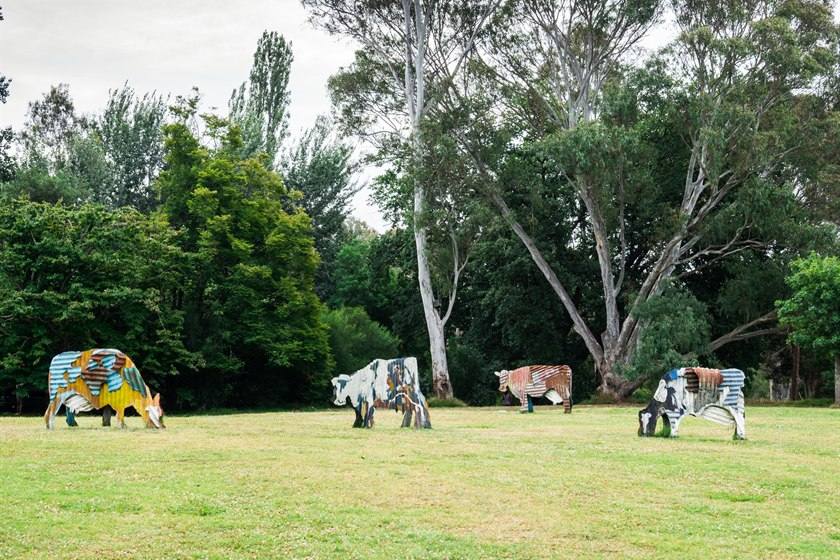
The suburb itself is unremarkable, a district of brick houses built mostly in the 1950s and 1960s on what had been orchards and river flats. It is the river corridor that matters. Here the Yarra winds through a broad floodplain of red gums and wetlands that has been kept as open space, and the museum sits right on its edge.
A visit to Heide combines easily with a walk in the parks, or with a trip across the river to Heidelberg, where an earlier generation of painters founded the first distinctively Australian school of art. It is about twenty-five minutes by car from the middle of Melbourne.
History and Heritage
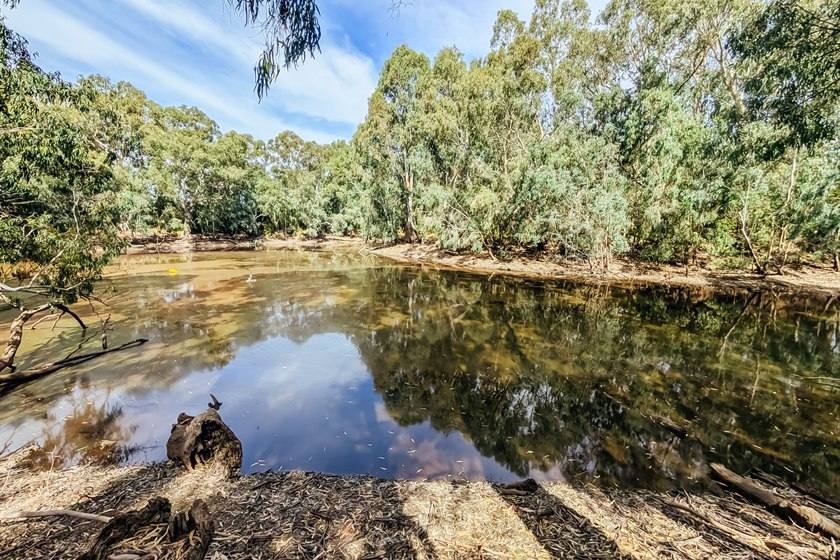
Bulleen lies on the Country of the Wurundjeri Woi-wurrung people of the Kulin Nation. Its name comes from Bolin Bolin, a billabong beside the river that was one of the most important gathering places in the region. Each year, when the eels were running, clans from across the Kulin Nation met here for weeks at a time to feast, trade, arrange marriages and conduct ceremony. The billabong still exists and is being restored in partnership with Wurundjeri elders.
Farms and Orchards
European settlers took up the rich river flats in the late 1830s and 1840s for grazing, dairying and crops. The hills behind, running back through Templestowe and Doncaster, were planted with orchards, and for more than a century this was one of the main fruit growing districts of Victoria, famous for its apples, pears, peaches and lemons. A few old orchards, and the homesteads of pioneer families, survive in Templestowe.
John and Sunday Reed
In 1934 a young couple, John and Sunday Reed, bought a run-down dairy farm of six hectares on the river at Bulleen and named it Heide, after the nearby town of Heidelberg. They were wealthy, cultured and committed to new ideas, and they set about making their home a haven for progressive artists and writers. Through the 1940s some of the most important painters in Australian history lived or worked there, among them Sidney Nolan, Albert Tucker, Joy Hester, Arthur Boyd and John Perceval.
The Heide Circle
The Reeds supported their artists with money, materials, food and fierce encouragement, and the relationships among the group were famously complicated. It was at Heide, on the dining room table, that Nolan painted most of his first great series on the bushranger Ned Kelly in 1946 and 1947. The Reeds also published a literary journal that became the target of the most celebrated hoax in Australian letters, when two poets invented a dead modernist genius and had his nonsense verses printed as masterpieces.
From Home to Museum
In the 1960s the Reeds commissioned a new house on the property, a spare modernist building of limestone and glass intended, in their words, as a gallery to be lived in. Shortly before their deaths in 1981 they sold the property and much of their collection to the state, and it opened as a public museum that year. Suburban development reached Bulleen after the war, as market gardeners and newly arrived Italian and Greek families built homes on the subdivided farms.
Attractions in Bulleen
Allow at least half a day for Heide, more if you plan to walk.
Heide Museum of Modern Art
The museum occupies three buildings spread through the grounds. Heide I is the original weatherboard farmhouse, restored to show how the Reeds lived, with its library and intimate rooms. Heide II is the modernist house of the 1960s, regarded as one of the finest Australian buildings of its time. Heide III is a purpose-built gallery for major exhibitions. Together they show work from the Reeds’ collection alongside changing exhibitions of modern and contemporary art. The museum is closed on Mondays.
The Sculpture Park and Gardens
The grounds, which are free to enter, are as much an attraction as the galleries. More than thirty sculptures by leading Australian and international artists are set across lawns and among trees that the Reeds planted. Sunday Reed’s two kitchen gardens, densely planted with herbs, vegetables and old roses, have been lovingly maintained, and paths lead down to the river and a wild garden beside it.
Banksia Park and the Artists’ Trail
Next to Heide, this riverside park has picnic lawns, barbecues and a playground. Signs along the river show paintings by Arthur Streeton, Tom Roberts and other artists of the Heidelberg School at the spots where they were painted in the 1880s and 1890s.
Bolin Bolin Billabong
A short walk downstream, the billabong lies in a patch of old river red gums. Interpretive signs explain its significance to the Wurundjeri people, and it is a peaceful place for birdwatching.
Westerfolds Park and the Yarra Trail
The Main Yarra Trail runs along the river through Bulleen and on into Templestowe. A few kilometres upstream, Westerfolds Park covers more than a hundred hectares of open grassland and bush on a bend of the river, where mobs of eastern grey kangaroos graze in the early morning and evening. There are rapids popular with canoeists, long walking and cycling paths, and a hilltop manor house.
Petty’s Orchard
In Templestowe, one of the last working orchards in the district grows more than two hundred heritage apple varieties, some of them very rare. It has a farm shop and cafe and holds tastings in autumn.
Where To Stay
Bulleen is a suburban area with very little visitor accommodation.
There are a few motels and hotels along the main roads in Bulleen, Doncaster and Heidelberg.
Most visitors come for the day from the city. The riverside town of Warrandyte, further upstream, and Eltham, to the north, are pleasant alternatives for those who want to stay on this side of town.
The nearest caravan park is BIG4 Crystal Brook Tourist Park at 182 Heidelberg-Warrandyte Road, Doncaster East, about 9 km east, with powered, ensuite and drive-through sites as well as self-contained cabins and villas. It is a good fit for travellers who want to visit Heide, the Yarra parklands and Warrandyte without driving across the city each day. Groups of up to 40 people can book Longridge Park Camp, a riverside group campground in the Yarra Valley Parklands managed by Parks Victoria.
The Camberwell Serviced Apartment Hotel at 85 Camberwell Road, Hawthorn East, about 10 km south, has one to three-bedroom apartments for families. The city centre, about 12 km away, has the widest choice of hotels and is a straightforward trip on the Eastern Freeway buses. With the North East Link works on Bulleen Road and the Eastern Freeway, allow extra time if you are towing, and avoid the side streets around Heide, which are narrow for vans.
Eat & Drink
The cafe at Heide is the natural place to eat, with a menu that draws on produce from the kitchen gardens and a terrace overlooking the sculpture park. Picnics are welcome in the grounds.
Banksia Park and Westerfolds Park both have barbecues and picnic shelters. For a sit-down meal, Templestowe Village, a few minutes’ drive east, has a good collection of restaurants, cafes and wine bars, and there are Italian eateries and clubs in Bulleen itself that reflect the local community.
Venues change, so check before making a special trip.
Heide Kitchen, run by the Mulberry Group, sits opposite the museum’s main entrance and serves breakfast and lunch from a seasonal menu built around produce from the Heide gardens. It also serves an afternoon tea in the spirit of the Reeds and sells picnic baskets to take into the sculpture park. On Bulleen Road, the Veneto Club, founded by Melbourne’s Veneto community, has a bistro for lunch and dinner, a delicatessen and a sports bar, and is a good place for northern Italian cooking and a glass of wine.
Westfield Doncaster, about 4 km east, has a food court and many restaurants, and across the river, Burgundy Street in Heidelberg has cafes and bakeries close to the station. Supermarkets are at Westfield Doncaster and in Heidelberg, and fuel is on Manningham and Doncaster roads.
Getting to Bulleen
By car, take the Eastern Freeway from the city to the Bulleen Road exit. Heide is on Templestowe Road and has free parking. A major road tunnel is under construction in the area, so allow for roadworks and detours.
By public transport, catch a train on the Hurstbridge line to Heidelberg Station and then a bus along Manningham Road, or walk across the river on the Banksia Street bridge, which takes about twenty-five minutes. Buses also run from the city along the Eastern Freeway to Bulleen.
Cyclists can follow the Main Yarra Trail all the way from the city, a scenic ride of about twenty kilometres.
Experiences
- City
- Cultural
- Historic/Heritage
- Nature based
- Relaxation
Popular Activities
- Bird Watching
- Bush Walking
- Canoeing
- City Sightseeing
- Cycling
- Food and Wine
