
South Wharf, VIC
South Wharf is a compact riverside precinct on the south bank of the Yarra, just downstream from Crown and the Southbank Promenade. Once a row of cargo sheds and dry docks, it is now home to the Melbourne Convention and Exhibition Centre, a nineteenth century sailing ship, a strip of restaurants in restored wharf buildings and one of the city’s main outlet shopping centres.
Known For
- The Melbourne Convention and Exhibition Centre
- The tall ship Polly Woodside and its historic dry dock
- Riverside dining in heritage cargo sheds, and outlet shopping at DFO
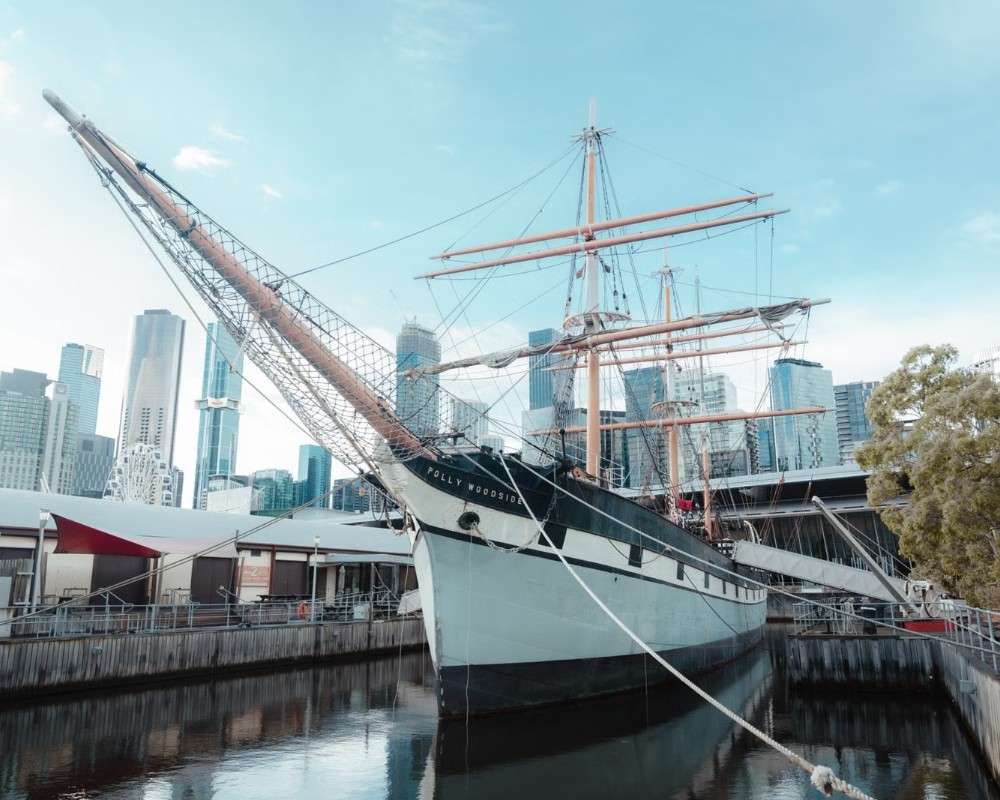
Few people set out to visit South Wharf for its own sake. Most arrive for a conference, a trade show or a public expo, and discover that there is a pleasant stretch of waterfront attached. It is quieter and less showy than neighbouring Southbank, with wide timber decks, views across the river to the city’s western skyline, and footbridges that link it to Docklands on the opposite bank.
It is also one of the smallest suburbs in Melbourne, with only a small resident population, and everything in it can be seen in an afternoon. Combined with a walk along the river in either direction, it makes an easy and worthwhile addition to a day in the city.
History and Heritage
For more than a century this was a place of hard physical work, and the precinct has kept more of its maritime past than most of the redeveloped riverfront.
The River Before the Wharves
The Yarra, or Birrarung, flows through the Country of the Wurundjeri Woi-wurrung and Bunurong peoples of the Kulin Nation. Before European settlement its lower reaches wound through low, marshy ground thick with tea-tree, and the river and its wetlands were a rich source of fish, eels and birds.
Cargo Sheds and Coastal Traders
As Melbourne boomed after the gold rush, wharves spread down both banks of the river below the city. The south side handled timber, coal, wheat and general cargo carried by the coastal ships that linked the Australian colonies. A line of long, gabled cargo sheds was built along the quay in the 1880s, with railway sidings behind and cranes at the water’s edge. Several of these sheds survive and are protected as the last substantial group of their kind in the city.
The Dry Docks
Ship repair was the other great industry. A series of dry docks was dug into the riverbank from the 1860s, where vessels could be floated in, the water pumped out, and their hulls scraped, painted and mended. The largest, Duke and Orr’s Dry Dock, was built in 1875 with timber-lined walls and remained in use for a century. Its steam-driven pump house still stands beside it.
Decline and Renewal
New bridges across the lower Yarra progressively cut the old river wharves off from shipping, and the move to containers in the 1960s finished the job. The last dry dock closed in 1975 and the area fell derelict. Revival came in stages. Volunteers from the National Trust restored the Polly Woodside and opened it to the public in the late 1970s. The Melbourne Exhibition Centre opened beside the river in 1996, followed in 2009 by the convention centre, a hotel, the outlet mall and the restoration of the cargo sheds as a dining precinct.
Attractions in South Wharf
The precinct stretches for about half a kilometre along the river, and all of its sights are within a few minutes of each other.
Polly Woodside
The star of South Wharf is a three-masted iron barque launched in Belfast in 1885. Polly Woodside spent her working life carrying coal, wheat and nitrate around the world and rounded Cape Horn sixteen times, before ending her days as a coal hulk in Port Phillip. Rescued and restored by National Trust volunteers over many years, she now sits in the old Duke and Orr dry dock, one of very few ships of her type left afloat anywhere. Visitors can go aboard, explore the cabins and hold, and learn about life at sea in the last days of sail in the adjoining gallery. Opening days are limited, so check ahead.
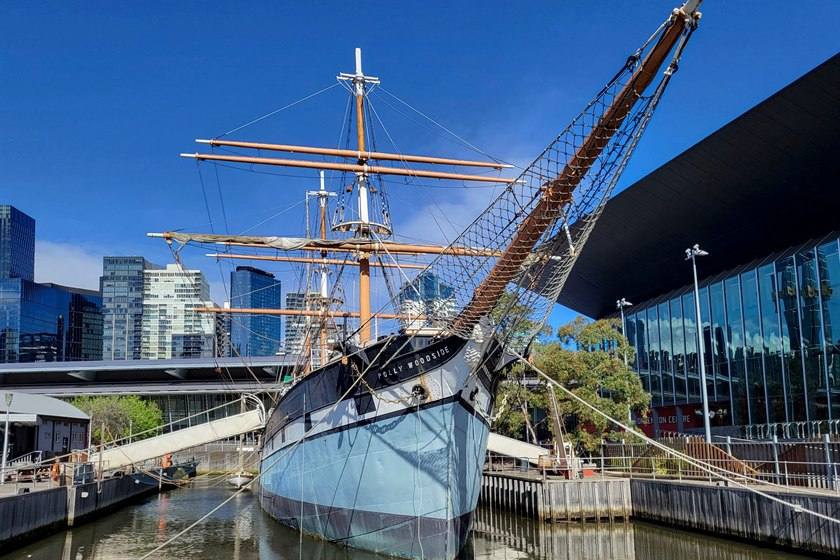
Melbourne Convention and Exhibition Centre
The exhibition centre, with its long blade-like roof and angled yellow entrance, opened in 1996 and was quickly nicknamed Jeff’s Shed, after the premier of the day, Jeff Kennett. The convention centre next door was added in 2009 and was among the first in the world to earn a top environmental rating. Together they form the largest venue of their kind in Australia. Alongside business conferences, the halls host public events through the year, including gaming, pop culture, food, craft, travel and home shows, so it is worth seeing what is on during your stay.
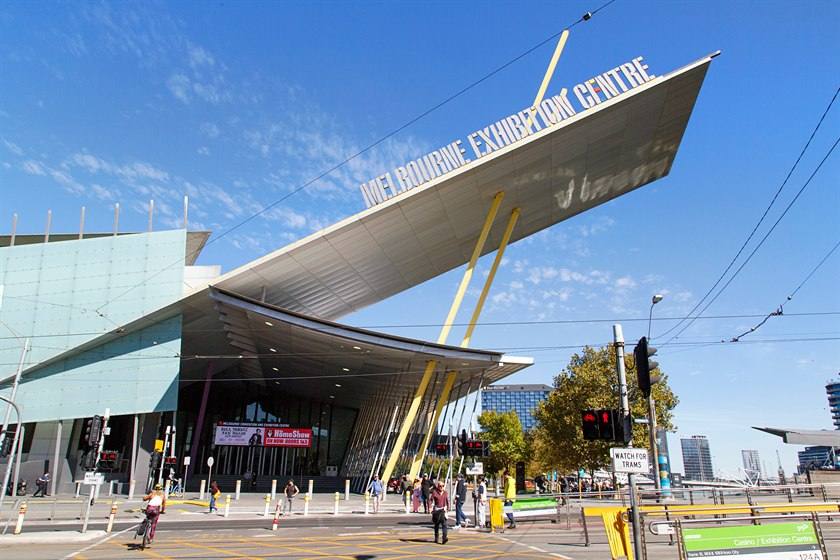
South Wharf Promenade
The restored cargo sheds along the river now house restaurants and bars, with tables set out on a broad timber deck. Old crane rails, bollards and mooring rings have been left in place, and information panels explain how the wharf once worked. It is a relaxed place to sit by the water, particularly on a sunny afternoon or a warm evening, and it is far less crowded than the promenade further upstream.
Bridges and River Walks
The Seafarers Bridge, a graceful footbridge hung from white steel arches, crosses the river from the convention centre to the north bank and Docklands. A little downstream, the Webb Bridge winds across to the southern end of Docklands inside a tunnel of steel hoops. Both are part of the walking and cycling path that follows the Yarra for many kilometres, and a circuit that takes in the two bridges and both banks makes a good short walk.
DFO South Wharf
Behind the exhibition centre, this large outlet centre has well over a hundred stores selling discounted fashion, sportswear, homewares and luggage from Australian and international brands. It is the closest outlet shopping to the city centre and is open daily.
Polly Woodside Open Days
The ship and its museum open to the public on the first Sunday of each month, when visitors can explore at their own pace or join one of the guided tours, which run several times a day and take 45 minutes to an hour. On the third Sunday of the month a shorter Pirate Day in the morning is aimed at children, with dressing up and pirate games around the ship. Groups and schools can book visits on other days. The museum is fully accessible, but boarding the ship means a gangway and steep stairs.
Where To Stay
South Wharf has two large hotels, both attached to the convention centre and both popular with delegates. They are also a good choice for leisure travellers who want river views and a quieter setting within walking distance of Crown, Southbank and Docklands.
The Pan Pacific Melbourne is a five-star hotel beside the Seafarers Bridge, with spacious rooms, floor-to-ceiling windows and views along the river or across to the bay. The Novotel Melbourne South Wharf, opened in 2018, is a more affordable modern hotel at the western end of the precinct.
There is a much larger choice of hotels and serviced apartments a few minutes’ walk away in Southbank, and across the bridges in Docklands. Room rates in South Wharf rise sharply when a major conference or exhibition is in town, so check the events calendar before you book.
Across Clarendon Street, a five to ten minute walk east, Crown has three hotels: the luxury Crown Towers, the large Crown Metropol with its high-level pool, and Crown Promenade, the most affordable of the three, all close to the restaurants of the casino complex. A little further into Southbank, the newer Hannah St Hotel has nearly 200 suites, a pool and five bars and restaurants on site. On the north bank, over the Seafarers Bridge, Nesuto Docklands is an apartment hotel that suits families, with accessible rooms and an easy walk to Marvel Stadium.
South Wharf has no caravan or camping sites, and the car parks under the exhibition centre and DFO are not built for caravans. The nearest caravan parks are Discovery Parks – Melbourne in Braybrook, about 10 km west, and the Melbourne BIG4 Holiday Park in Coburg, about 12 km north, both with trams or buses into the city.
Eat & Drink
Dining in South Wharf is concentrated along the promenade, where the heritage sheds give the restaurants high timber ceilings and plenty of character.
The Boatbuilders Yard, beside the Polly Woodside, is a large, casual bar and eatery with an outdoor deck that catches the afternoon sun. The Munich Brauhaus is a vast Bavarian beer hall serving steins, pork knuckle and pretzels to long shared tables. Other venues along the strip offer steak, Asian and Mediterranean menus.
During exhibitions, the cafes inside the convention centre and the food court at DFO are busy at lunchtime. For more choice, the restaurants of Crown and Southbank are a five to ten minute walk east along the river. Venues change, so check before making a special trip.
The Boatbuilders Yard, at 23 South Wharf Promenade, is set in an original cargo shed with a modern fit-out by Six Degrees architects; it opens for breakfast and coffee, serves a South American and Mediterranean menu, and its windows fold right open onto the deck in good weather. Munich Brauhaus at number 45 has two bars, three dining rooms and a beer garden, with set menus of pretzels, crispy pork knuckle, schnitzel and suckling pig, and band and karaoke nights.
Between the two, BangPop at number 35 is a bright, colourful Thai restaurant and cocktail bar on the river. Across Clarendon Street at Crown, Spice Temple serves regional Chinese dishes built for sharing, and Rockpool Bar and Grill is the place for dry-aged steak. There is no supermarket or fuel in the precinct itself, so stock up in the city or Southbank.
Getting to South Wharf
South Wharf is about fifteen minutes on foot from Southern Cross Station. Walk south down Spencer Street, cross the river and turn right along the promenade, or follow the north bank and cross on the Seafarers Bridge.
Trams running down Spencer Street and Clarendon Street stop outside the exhibition centre, and trams along Flinders Street on the north bank stop near the Seafarers Bridge. The stops south of the river are outside the Free Tram Zone, so you will need a myki card.
There is a large car park beneath the exhibition centre and another at DFO, both reached from Normanby Road, and South Wharf is close to the West Gate Freeway and CityLink. Parking fills quickly during major events. In the warmer months, ferries and water taxis also call at landings along this part of the river, including services to Williamstown.
Experiences
- City
- Food and Wine
- Historic/Heritage
Popular Activities
- Bush Walking
- City Sightseeing
- Cycling
- Food and Wine
- Shopping
