
Southbank, VIC
Southbank is where Melbourne comes to be entertained. Stretched along the south side of the Yarra River, directly opposite the city centre, it packs the state’s major galleries, theatres and concert halls, the Crown casino complex, a riverside promenade of restaurants and some of the tallest buildings in the country into an area you can walk across in twenty minutes.
Known For
- The Southbank Promenade and its riverside dining
- The Arts Centre spire, the National Gallery of Victoria and the wider Melbourne Arts Precinct
- Crown Melbourne, Eureka Tower and the Melbourne Skydeck
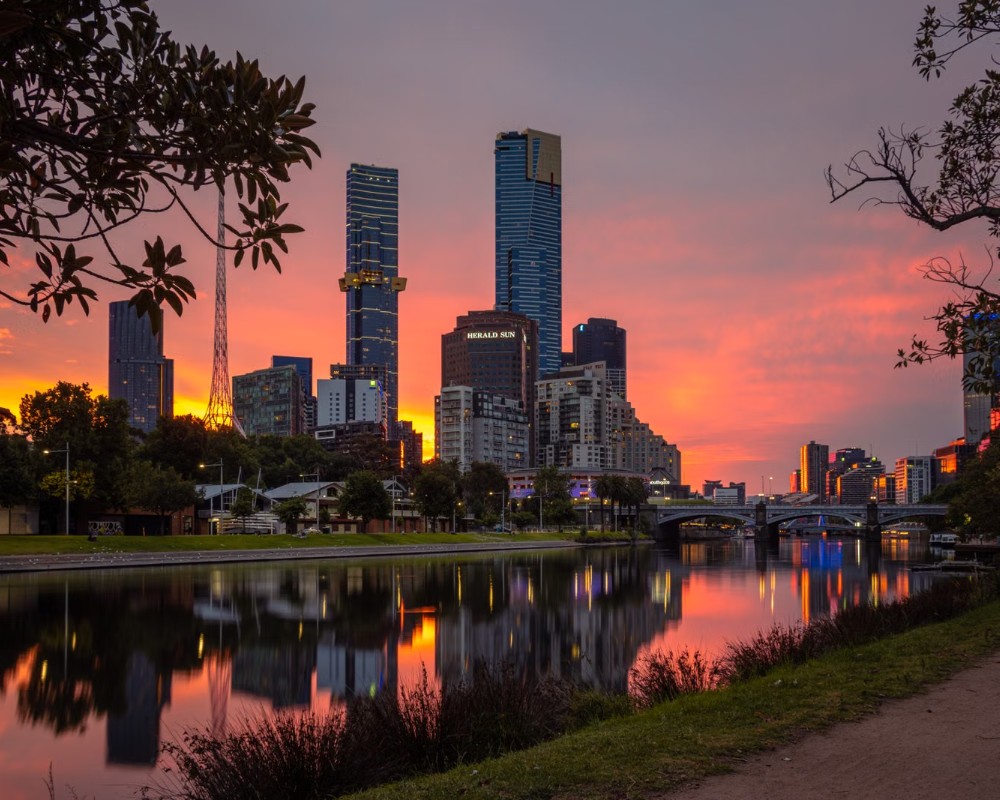
Forty years ago almost none of this existed. Southbank was a district of factories, warehouses and railway yards that most Melburnians had little reason to visit. Its reinvention since the 1990s is one of the more successful pieces of urban renewal in Australia, and it turned a city that had long ignored its river around to face the water.
For visitors, Southbank works in two ways. It is a destination in its own right, with enough galleries, shows and restaurants to fill several days, and it is also one of the most convenient places to stay in Melbourne, a short walk over the bridges from Flinders Street Station, Federation Square and the laneways of the city centre.
History and Heritage
The Yarra, known as Birrarung, runs through the Country of the Wurundjeri Woi-wurrung and Bunurong peoples of the Kulin Nation. Before the city was built, the low ground south of the river was a mosaic of swamps, lagoons and tea-tree scrub, rich in fish, eels and waterbirds.
The River and the Falls
A rocky ledge once crossed the river near where Queens Bridge now stands. Known to settlers simply as the Falls, it separated the salty tidal water downstream from the fresh water above and gave people a place to cross on foot. It was this fresh water that persuaded the founders of Melbourne to settle here in 1835. The rocks were blasted away in the 1880s to reduce flooding, and the river has been tidal through the city ever since.
Factories, Wharves and Circuses
Because it flooded regularly, the south bank was left to industry. Through the nineteenth and early twentieth centuries it filled with foundries, breweries, timber yards, tea and wool stores and the wharves that served them. A few buildings survive from that era, including the red-brick Tea House on Clarendon Street, built in the 1880s, and the bluestone Jones Bond Store.
The area also had a lighter side. The land where the Arts Centre now stands was for decades the permanent home of Wirth’s Circus, alongside dance halls and an open-air cinema. When the circus buildings burned down in the 1950s, the site was earmarked for a new cultural centre.
The Arts Arrive
The National Gallery of Victoria moved into its new bluestone building on St Kilda Road in 1968. Designed by Roy Grounds, it was followed by the Melbourne Concert Hall, now Hamer Hall, in 1982 and the Theatres Building beneath its lattice spire in 1984. For years, though, these stood on the edge of an industrial wasteland, cut off from the river.
Turning to Face the River
The change came in the early 1990s, when the Southgate complex and the first stretch of riverside promenade opened on the site of old warehouses. Crown’s entertainment complex followed in 1997, extending the promenade west, and apartment and office towers rose behind. Eureka Tower was completed in 2006, and Australia 108, finished in 2020, became the tallest building in the country measured to its roof. Southbank is now one of the most densely populated suburbs in Australia.
Attractions in Southbank
Most of what visitors come for lies in two strips: the promenade along the river, and the arts precinct that runs south from the Arts Centre along St Kilda Road and Sturt Street.
Southbank Promenade
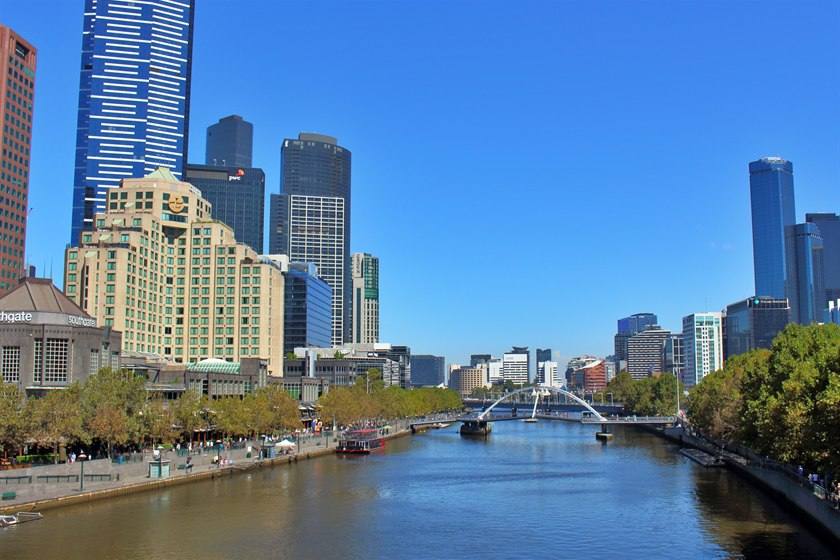
The wide riverside walk from Princes Bridge to Queens Bridge and on past Crown is the heart of the suburb. It is lined with restaurants, bars and cafes and looks across the water to Flinders Street Station and the city skyline, which is especially good at dusk. Buskers work the crowds on weekends, river cruises leave from the landings at Southgate, and rowing crews train along this stretch in the early morning. Footbridges link the promenade to the city, among them the old Sandridge railway bridge, now a pedestrian crossing lined with steel figures representing the waves of migrants who arrived in Victoria.
Arts Centre Melbourne
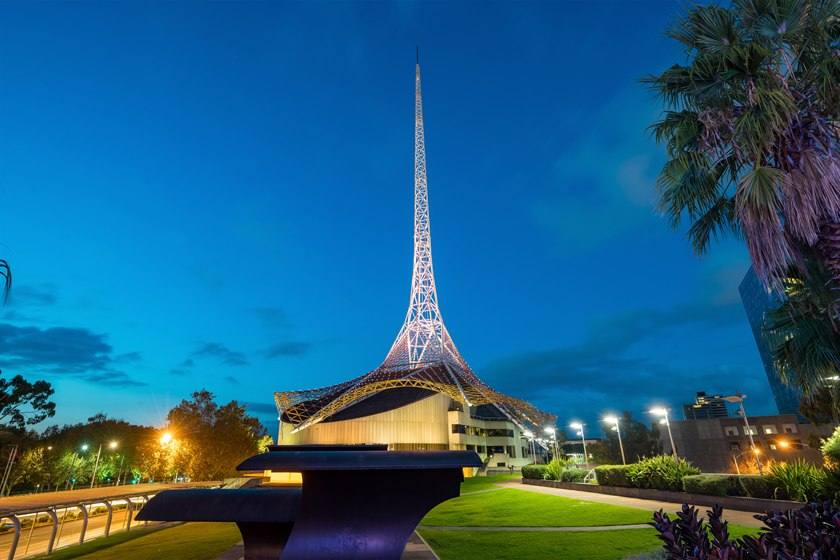
The white spire of the Arts Centre, lit at night, is one of the symbols of the city. Beneath it are the Ian Potter State Theatre, home to opera and ballet, and two smaller theatres, while next door Hamer Hall hosts the Melbourne Symphony Orchestra. Even without a ticket you can wander the foyers, see the free exhibitions drawn from the Australian Performing Arts Collection, and join a guided tour. The Sunday makers’ market long held outside has moved next door to the riverside promenade at Southgate.
National Gallery of Victoria
NGV International is Australia’s oldest and most visited art museum. Entry to the permanent collection is free, and it covers European, Asian, American and Oceanic art along with major ticketed exhibitions through the year. Generations of local children have run their hands down the water wall at the entrance and laid on the floor of the Great Hall to look up at Leonard French’s enormous stained-glass ceiling. The gallery’s Australian collection is shown separately at Federation Square, a few minutes away across the river.
The Wider Arts Precinct
Behind the gallery, Sturt Street and its surrounds hold a cluster of other institutions. The Australian Centre for Contemporary Art occupies a striking rust-coloured steel building and is free to enter. The Malthouse Theatre stages new Australian work in a converted brewery malthouse. The Melbourne Recital Centre and the Melbourne Theatre Company’s Southbank Theatre sit side by side on Southbank Boulevard, and Buxton Contemporary shows a significant private collection given to the University of Melbourne. A long-term redevelopment of the precinct, including a new contemporary art gallery and public gardens, is under way, so expect some construction.
Eureka Tower and Melbourne Skydeck
At 297 metres, Eureka Tower was the tallest residential building in the world when it opened. The Skydeck on level 88 is the highest public observation deck in the southern hemisphere, with views that take in Port Phillip Bay, the sports precinct and, on a clear day, the Dandenong Ranges. The Edge, a glass cube that slides out from the side of the building, is not for the nervous.
Crown Melbourne
Crown stretches for half a kilometre along the river and is far more than a casino. Under one roof are three hotels, dozens of restaurants and bars, cinemas, designer shops, a theatre and nightclubs. After dark, the row of towers along the promenade outside shoots balls of fire into the air on the hour, a spectacle that is free and can be felt as well as seen.
Where To Stay
Southbank has one of the largest concentrations of hotel rooms in Melbourne, and nearly all of them are within a few minutes of the river.
The three Crown hotels cover a range of budgets at the upper end. Crown Towers is the most lavish, with large rooms, a well-known spa and river views. Crown Metropol is more contemporary and has a pool and lounge on its top floors, while Crown Promenade is the most affordable of the three and is linked to the complex by a footbridge.
At Southgate, The Langham is a long-established luxury hotel in a classic style, known for its afternoon tea and for upper-floor rooms that look straight across the river to the city. Quay West Suites, nearby, offers apartment-style accommodation with kitchens, which suits families and longer stays.
Further back from the river there are many serviced apartment towers and mid-range hotels, particularly around City Road and Southbank Boulevard. These are usually cheaper than the riverfront and are still only a short walk from everything. Book well ahead for the Australian Open in January, the Grand Prix in March and the spring racing season.
Eat & Drink
Eating by the river is one of the main reasons people come to Southbank, and the choice runs from food court lunches to some of the most expensive tables in the city.
Crown has the highest concentration of big-name restaurants. Nobu serves Japanese-Peruvian dishes, Rockpool Bar & Grill is known for its dry-aged steak, and Bistro Guillaume does French classics. There are also cheaper options inside the complex, including a large food court.
Southgate has three levels of restaurants, cafes and bars, many with balconies over the promenade. It is a reliable place for a meal before a show at the Arts Centre next door. Out on the river itself, Ponyfish Island is a small open-air bar built on a pylon of the pedestrian bridge, reached by a staircase from above.
For something less polished, walk a few blocks south to Clarendon Street and the South Melbourne Market, where the food is aimed at locals rather than visitors. Restaurants here change often, so check what is open before making a special trip.
Getting to Southbank
Southbank is an easy walk from the city centre. From Flinders Street Station, cross Princes Bridge to reach the Arts Centre, or take the footbridge from the riverbank below the station straight to Southgate. From Southern Cross Station, walk down Spencer Street and over the river to Crown.
Trams run along St Kilda Road past the Arts Centre and the gallery, and along Clarendon Street past Crown and the exhibition centre. Southbank is just outside the city’s Free Tram Zone, so you will need to touch on with a myki card.
Driving is possible but rarely worthwhile. There are large car parks under Crown, Southgate and the Arts Centre, though they are expensive during events. River cruises and seasonal ferries, including services down the river to Williamstown, leave from the Southgate landings, and the bayside suburb of St Kilda is about fifteen minutes away by tram.
Experiences
- City
- Cultural
- Food and Wine
- Indulgence/Luxury
Popular Activities
- City Sightseeing
- Cruising
- Food and Wine
- Nightlife
- Shopping
About Southbank
Accommodation In Southbank
Discover some of the accommodation in and around Southbank
Tours In Southbank
Discover some of the tours options around Southbank
