
Mount Buffalo, VIC
Mount Buffalo is an isolated granite massif rising above the Ovens Valley near Bright, about 335 km north-east of Melbourne. Its plateau of huge tors, snow gums, alpine meadows and waterfalls was reserved as a national park in 1898, making it one of the oldest national parks in Australia.
A sealed 29 km road climbs from Porepunkah, and there is no park entry fee. The grand old Chalet, closed to guests from 2007, reopened for school and group stays in December 2024, and its cafe is now open on weekends and public holidays.
Known For
- The Horn and the Gorge
- Waterfalls and granite tors
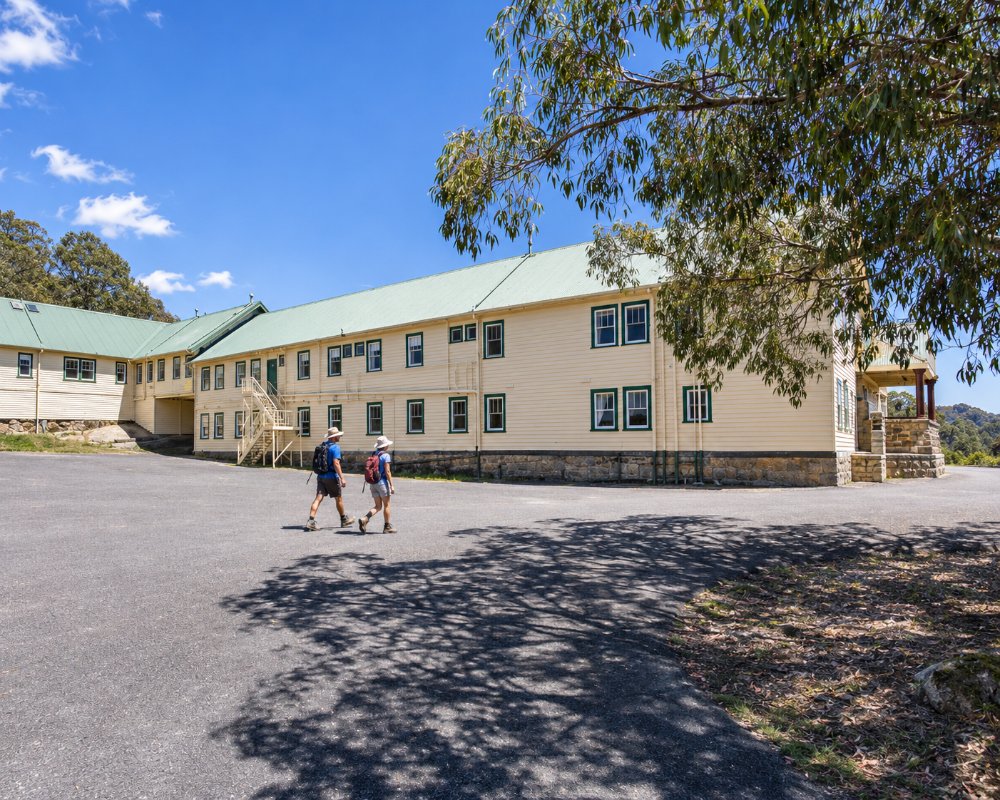
- The historic Mount Buffalo Chalet
Things To Do in Mount Buffalo
The Horn
The Horn, 1,723 metres, is the highest point on the plateau, reached by a short, steep walk from the car park at the end of Horn Road, with views across the Alps.
The Gorge
The Gorge, beside the Chalet, drops hundreds of metres in sheer granite walls. The Gorge Heritage Walk and Bents Lookout give fine views, and the cliffs are famous for rock climbing and hang gliding.
Waterfalls and Walks
Ladies Bath Falls and Eurobin Falls are short walks near the base of the mountain, and the Big Walk climbs from Eurobin Creek to the plateau. Cathedral Saddle and the walks around Lake Catani explore the tors and snow gums.
Snow Play
In winter, Dingo Dell and Cresta Valley have toboggan runs, snow play and cross-country skiing; Dingo Dell has a seasonal cafe.
Mount Buffalo Chalet
The Chalet, built in 1910 and said to be the largest timber building in Australia, was run by Victorian Railways from 1924 to 1985 and closed to guests in 2007. A 40-year lease was signed in 2024, and the reopening is staged: school and group stays began in December 2024, the cafe has reopened, and public room bookings are planned; check before you go.
When To Visit
Summer and autumn are best for walking, camping and climbing. In winter the plateau is snowy and some roads close, including Horn Road beyond Cresta, from mid-June to about mid-September. Chains must be carried on signposted days.
Where To Stay
For campers, the Lake Catani campground has unpowered sites, hot showers and room for small vans; summer camping runs from Melbourne Cup weekend to the end of April and must be booked, and campers must bring their own drinking water. Remote hike-in camping is available at Mount McLeod and Rocky Creek. The Horn and Reservoir roads are unsealed and not suitable for caravans. Porepunkah, at the foot of the mountain, has several caravan parks.
Lake Catani has 47 campsites among the snow gums. Some suit small caravans and campervans, others suit only cars and tents, and there are quieter walk-in sites. Several level sites close to the amenities block suit visitors in wheelchairs, and an accessible toilet and hot shower have their own entrance. The campground has flush toilets, hot showers, dishwashing and laundry sinks, and an old stone hut with tables and two fireplaces for cold evenings. In winter, from the Friday before the King’s Birthday long weekend in June to the end of August, camping at Lake Catani is free and needs no booking, but the campground can only be reached on skis, on snowshoes or on foot, about 1 km in.
The Chalet now takes school, club and corporate groups, with bunk rooms and leaders’ rooms with ensuites, and plans to open for public bookings. At the foot of the mountain, Porepunkah, about 30 km below the Chalet, has Bright Porepunkah Holiday Park, Porepunkah Pines and Riverview Caravan Park, and Bright, 6 km further, has many more. The nearest dump point is at the NRMA Bright Holiday Park on Cherry Lane.
Eat & Drink
There are few places to eat on the mountain: a winter cafe at Dingo Dell and the Chalet cafe, which is open on weekends and public holidays. Bring food, or eat in Porepunkah and Bright.
The Chalet cafe, back in business inside the historic building, serves coffee and food with mountain views on weekends and public holidays, and in winter a cafe runs at the Dingo Dell day visitor centre. There is nothing else on the plateau, so pack a picnic for Lake Catani, the Gorge or the Horn. In Porepunkah, about 30 km below the Chalet, Punkah Pantry and the Rail Trail Cafe do coffee and lunch, and the Porepunkah Pub serves meals with river views; Bright, 6 km further on, has many more cafes and restaurants.
History
This is Taungurung Country, and Taungurung and other peoples came to the plateau for Bogong moths. Hume and Hovell named the mountain in 1824 for its shape. The national park was reserved in 1898, the Chalet opened in 1910, and Australia’s first ski tow was built here. Fires in late 2006 destroyed Cresta Lodge but spared the Chalet.
Getting to Mount Buffalo
Mount Buffalo is about 335 km north-east of Melbourne, around 4 hours’ drive via the Hume Freeway, Wangaratta and the Great Alpine Road to Porepunkah, then 29 km up the sealed Mount Buffalo Road. There is no public transport.
Experiences
- Active
- Eco Tourism
- Mountain
- Nature based
Popular Activities
- Bush Walking
- Caravan and Camping
- Hang Gliding
- National Park
- Rock Climbing
- Swimming
- Wildlife
About Mount Buffalo
- Locality: Rural locality
- Mount Buffalo Postcode: 3740
- State: Victoria
- Region: High Country
- Latitude: -36.69815
- Longitude: 146.77764
- Elevation: 1387m
- Timezone: Australia/Melbourne
