
Maria Island, TAS
Maria Island sits a few kilometres off Tasmania’s east coast, a 30-minute ferry ride from the fishing town of Triabunna and about an hour and a quarter’s drive from Hobart. The whole island is a national park with no shops, no cars and no permanent residents, which is exactly why people go: convict ruins, empty beaches, mountain walks and wombats grazing beside the track.
Known For
- World Heritage convict ruins at Darlington
- The Painted Cliffs and Fossil Cliffs
- Wombats, Cape Barren geese and Tasmanian devils
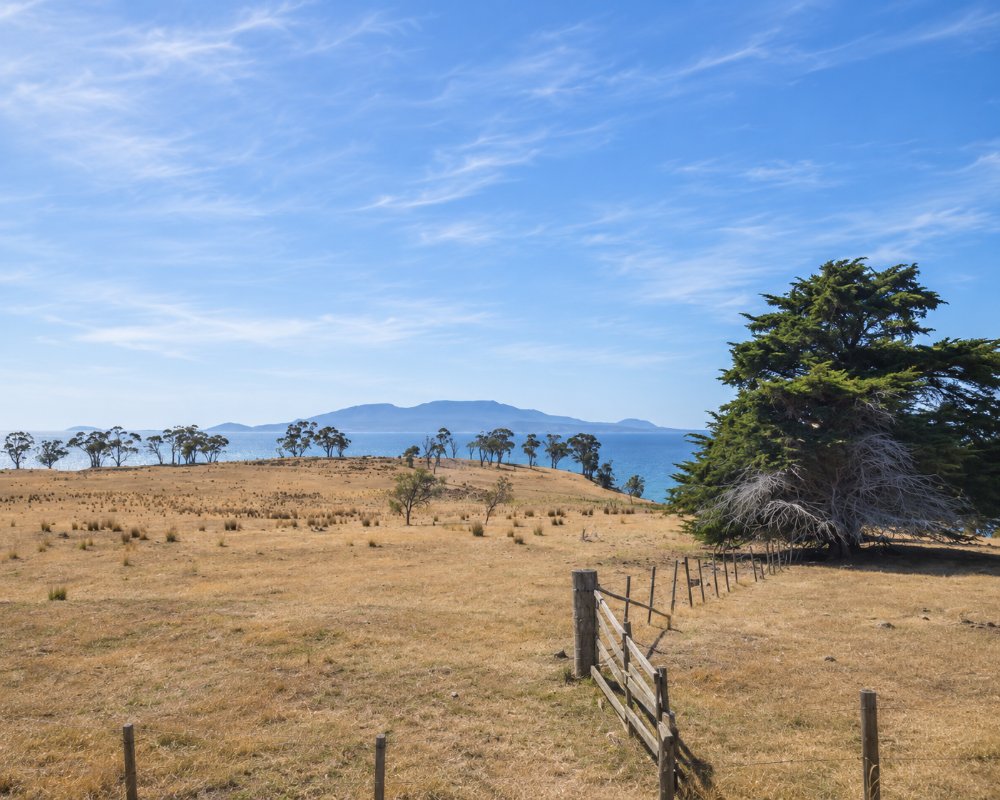
The ferry lands at Darlington, on the island’s northern end, where almost everything of historic interest is within a short walk of the jetty. From there, gravel roads and walking tracks fan out along the coast and up into the hills. Visitors get around on foot or by bicycle, and a day trip is enough to see Darlington and one or two of the shorter walks. Staying overnight opens up the mountain summits and the quiet southern half of the island.
Maria Island is also one of the easiest places in Tasmania to see native animals in daylight. Wombats, Forester kangaroos, Bennett’s wallabies and pademelons graze the open paddocks around Darlington, Cape Barren geese wander through the settlement, and the island is a stronghold for the endangered forty-spotted pardalote. Tasmanian devils were released here in 2012 as an insurance population free of facial tumour disease.
Things To Do
Darlington Probation Station
Darlington is the most intact convict probation station in Australia and one of the eleven Australian Convict Sites on the World Heritage List. The Commissariat Store near the jetty, built in 1825, is the oldest building on the island and now serves as the visitor information point. Beyond it are the long, low Penitentiary, the mess hall, the bakehouse and the cottage where Irish political prisoner William Smith O’Brien was held in 1849. The Coffee Palace, a relic of the island’s later resort era, houses a small museum.
Painted Cliffs
An easy 4.3 km return walk south of Darlington leads to sandstone cliffs stained in swirling bands of orange, red and cream by iron-rich groundwater. The rock platform is only safe to reach within about two hours of low tide, so check the tide times at the ferry terminal before setting out.
Fossil Cliffs
A 4.5 km circuit north of Darlington passes limestone cliffs packed with the fossilised shells, sea fans and corals of an ancient seabed, with wide views across to the Freycinet Peninsula.
Bishop and Clerk
This 11 km return walk climbs through open forest and over a scree slope to dolerite columns at the island’s northern tip. Allow four to five hours and expect some scrambling near the top. On a clear day the view takes in most of the east coast.
Mount Maria
The island’s highest point, at 711 metres, is a full-day 16 km return walk from Darlington with a boulder scramble to finish.
Cycling and the Southern Island
The gravel roads south of Darlington are well suited to bikes. Frenchs Farm, Encampment Cove and the convict ruins at Point Lesueur are all within a day’s ride, as are the white-sand beaches on either side of McRaes Isthmus, the narrow neck joining the two halves of the island. The waters off the north-west coast are a marine reserve, popular with snorkellers and divers.
History
The island is wukaluwikiwayna to Tasmanian Aboriginal people, and the Tyreddeme band of the Oyster Bay nation lived and travelled here for thousands of years, crossing from the mainland in bark canoes. Shell middens around the coast are reminders of that long occupation.
Abel Tasman sighted the island in December 1642 and named it after Maria van Diemen, wife of the Governor-General of the Dutch East Indies. French explorer Nicolas Baudin spent several days here in 1802, and sealers and whalers were working the surrounding waters soon after.
In 1825 Governor Arthur established a penal settlement at Darlington, the second in Van Diemen’s Land. It closed in 1832 once Port Arthur was operating, then reopened in 1842 as a probation station, with a second station built at Point Lesueur in 1845. The convicts left for good by 1851.
The island’s most colourful chapter began in 1884, when Italian entrepreneur Diego Bernacchi leased it with plans for vineyards, silk and cement. He renamed Darlington “San Diego” and built a hotel and the Coffee Palace before the venture collapsed in the 1890s. A second attempt at cement production in the 1920s was finished by 1930, leaving the concrete silos that still stand beside the jetty. Maria Island was declared a national park in 1972.
Where To Stay
Accommodation on the island is simple and run by the Tasmania Parks and Wildlife Service.
Bring all your drinking water. In late 2026 there is no treated water on the island and the Darlington showers are closed while water and power works are carried out, due to finish in November 2026. Check in 45 minutes before the ferry leaves; drinks and snacks are sold on board.
No vehicles go to the island, so caravans and motorhomes stay at Triabunna. There is free parking around the marina, and the Triabunna Cabin and Caravan Park is a short walk from the ferry; ask there about leaving a van for the day. Bikes can be hired through the ferry operator and collected at Darlington.
The Maria Island Penitentiary offers bunkhouse rooms in the original convict building at Darlington. Nine rooms sleep six people each and a larger tenth room sleeps fourteen. Each has bunks with mattresses, a table and a wood heater, but no electricity, and you will need to bring your own bedding. Rooms book out well ahead in summer and school holidays.
The Darlington campground is a short walk from the jetty and has toilets and a shelter. Further south, there are free, basic campsites at Frenchs Farm and Encampment Cove for walkers and cyclists.
For more comfort, the guided four-day Maria Island Walk includes private wilderness camps and a final night in the restored Bernacchi House. Otherwise, visitors who prefer a proper bed can base themselves on the mainland at Triabunna or nearby Orford and visit for the day.
Darlington campground bookings are made through Parks and Wildlife, and camping fees are paid at the Maria Island Gateway beside the Triabunna wharf, which also sells parks passes. Penitentiary room fees can be paid online. Frenchs Farm, the base for exploring McRaes Isthmus, and Encampment Cove, near the Point Lesueur probation station ruins, are free.
The island’s water is not safe to drink untreated: taps at the barbecue shelter and the Mess Hall at Darlington have a limited supply, so boil it or use purification tablets. A seasonal campfire ban covering Maria Island began on 26 October 2026, so carry a fuel stove.
On the mainland, Spring Bay Mill, on the headland south of Triabunna, has beach shacks, cottages, ridge suites and a glamping field, and Triabunna Barracks by the marina and the Spring Bay Hotel’s rooms are a short walk from the ferry. In Orford, 6 km south, Eastcoaster Tasmania has motel rooms, villas and family cabins with pools and a boat ramp. Campervans and caravans heading north can use the Parks and Wildlife campground at Mayfield Bay, about 35 km north of Triabunna, by donation, and there are grey and black water disposal sites in Triabunna and Swansea.
Eat & Drink
There are no shops, cafes or restaurants on Maria Island, and nowhere to buy food or drink once you leave Triabunna. Bring everything you need for your stay, including snacks and water for longer walks, and carry all your rubbish back to the mainland.
Stock up at the supermarket in Triabunna or Orford before boarding. Triabunna is a working fishing port, and the fish and chip van at the marina is a popular stop before or after the ferry.
There is nowhere to buy food on the island. In Triabunna, the Fish Van at 19 Esplanade cooks fish to order beside the fishing boats, and the Spring Bay Hotel on the marina, at 1 Charles Street, serves meals and drinks. Orford, 6 km south, has Elly’s Tasting Table for coffee, cakes and all-day breakfast, and the Orford Blue Waters hotel bistro, open for lunch and dinner every day. Maria Island Cruises’ cruise and walk day from Triabunna can include lunch.
Getting There
Triabunna is about 85 km north-east of Hobart on the Tasman Highway, a drive of around 1 hour 15 minutes. From Swansea it is about 50 km south.
The Encounter Maria Island passenger ferry runs from the Triabunna wharf to Darlington in about 30 minutes. It sails several times a day from September to April and on a reduced timetable from May to August, when there are no services on some weekdays. Bookings are essential, and all passengers check in at the Maria Island Gateway building beside the wharf.
A valid Tasmanian national parks pass is required to visit. No private vehicles are allowed on the island. Bicycles can be taken on the ferry, and bike hire is available through the ferry operator.
Experiences
- Caravan and Camping
- Historic/Heritage
- Island
- Nature based
- Self-Drive
Popular Activities
- Bush Walking
- Caravan and Camping
- Cycling
- National Park
- Wildlife
- World Heritage
About Maria Island
- Locality: Island
- Maria Island Postcode: 7190
- State: Tasmania
- Region: East Coast
- Latitude: -42.58100
- Longitude: 148.06800
- Timezone: Australia/Tasmania
