
D’Estrees Bay, SA
D’Estrees Bay offers a peaceful retreat that captures the essence of South Australia’s charm. Stretching along the southern coast of the island, this serene locale combines pristine beaches with an abundance of wildlife, making it a must-visit for nature enthusiasts and tranquility seekers alike.
Known For
- Untouched, stunning beaches
- Diverse and vibrant wildlife
- Fascinating historical landmarks
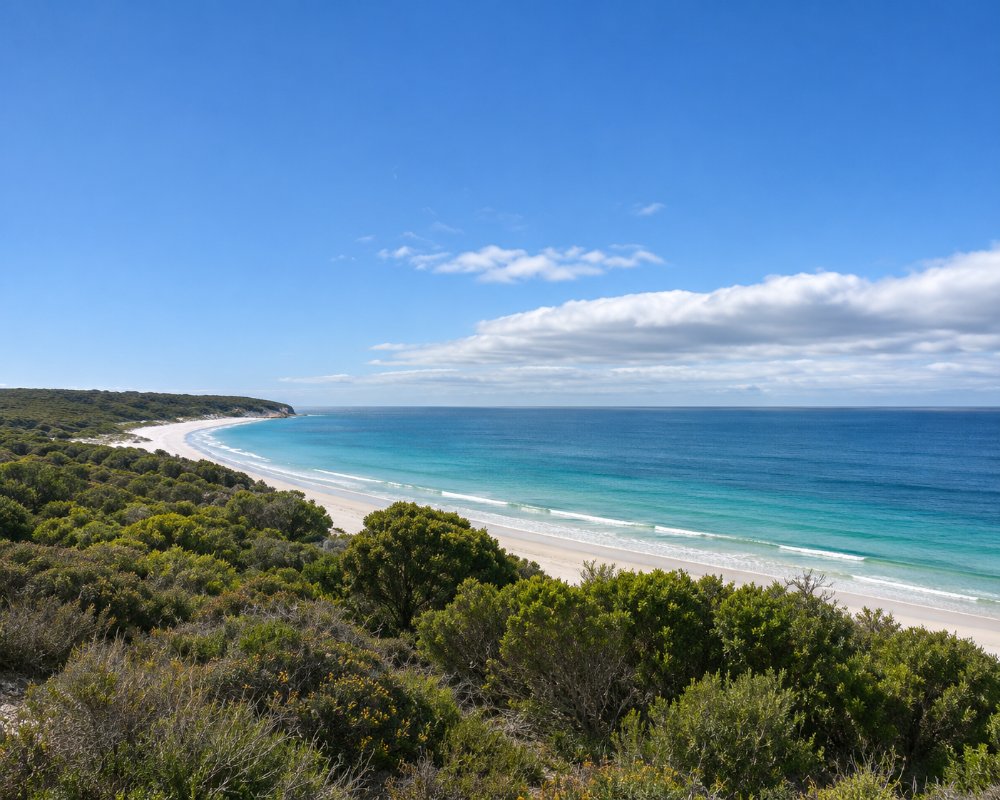
D’Estrees Bay is home to some of the most pristine beaches you’ll find in Australia. The soft, white sand stretches for miles, meeting the turquoise waters of the Southern Ocean. Whether you’re looking to take a peaceful walk along the shore or simply bask in the sun, these beaches offer an ideal escape from the bustle of daily life.
Fishing enthusiasts will appreciate the bay’s reputation as a prime spot for angling. The waters are teeming with local species such as King George whiting and flathead. And for those who prefer less gear-intensive activities, the gentle waves make it a perfect place for swimming or paddleboarding.
D’Estrees Bay is a sanctuary for wildlife, offering visitors a chance to connect with Kangaroo Island’s rich ecosystem. The area is renowned for its diverse birdlife, including rare species such as the endangered glossy black cockatoo. Birdwatchers often flock here with cameras in hand to capture these avian beauties in their natural habitat.
Beyond the birds, kangaroos, wallabies, and even the occasional echidna can be spotted near the bay. In the waters, keep an eye out for dolphins playing in the surf and seals lounging on nearby rocks. If you’re visiting between May and October, you might even catch a glimpse of migrating southern right whales.
Things To Do
D’Estrees Bay is not only a paradise for relaxation but also a haven for outdoor enthusiasts. The bay’s surrounding landscapes are perfect for hiking, offering trails that wind through coastal bushland and provide breathtaking views of the ocean. The D’Estrees Bay Scenic Drive is a popular route, where you can explore the rugged beauty of Kangaroo Island’s southern coastline.
For kayaking and canoeing enthusiasts, the calm waters near the bay’s sheltered areas make for an idyllic paddling experience. You can glide over the crystal-clear waters, taking in the untouched beauty of the coastline while keeping an eye out for marine life below. Adventurous visitors may also enjoy snorkelling in the bay, where the underwater world reveals vibrant sea life, including schools of fish and wide seagrass meadows.
Fishing, a timeless activity at D’Estrees Bay, is another way to immerse yourself in the natural surroundings. Whether casting from the beach or venturing out by boat, anglers are rewarded with abundant catches and the simple pleasure of being surrounded by nature.
Kangaroo Island is renowned for its commitment to preserving its unique environment, and D’Estrees Bay exemplifies this ethos. Visitors are encouraged to practice sustainable tourism by adhering to the “Leave No Trace” principles, ensuring that the bay remains as pristine for future generations as it is today.
Conservation projects on the island, such as the protection of endangered species like the glossy black cockatoo, are vital to maintaining the region’s biodiversity. Travellers can contribute to these efforts by supporting local eco-tourism operators and participating in guided tours that focus on wildlife education and conservation.
Additionally, D’Estrees Bay’s secluded nature offers a reminder of the importance of disconnecting from modern distractions. Many visitors find a deeper connection to the environment through quiet reflection, making this a destination that not only delights but also inspires.
Nearby Attractions
While D’Estrees Bay is a destination in its own right, its proximity to other Kangaroo Island attractions makes it an excellent starting point for broader exploration. D’Estrees Bay itself lies inside Cape Gantheaume Conservation Park, so the walks and wildlife of the park begin at the beach. The park features wetlands that attract migratory birds, as well as trails that lead to stunning coastal vistas.
Seal Bay Conservation Park is another must-visit destination nearby. Here, you can walk among the resident Australian sea lion colony, guided by knowledgeable rangers who share insights into these fascinating marine mammals.
For a taste of the island’s culinary delights, make time to visit local producers. Kangaroo Island is famous for its artisanal food and wine scene, with offerings ranging from fresh seafood and creamy cheeses to honey harvested from the island’s Ligurian bees. Cellar doors such as Dudley Wines on the Dudley Peninsula and the Kangaroo Island Spirits distillery at Cygnet River make good stops on the way to or from the bay.
Practical Tips for Visiting D’Estrees Bay
To make the most of your trip to D’Estrees Bay, it’s helpful to plan ahead. Access to the bay is via unsealed roads, so a sturdy vehicle is recommended. While this adds to the sense of adventure, it’s important to drive cautiously and prepare for changing weather conditions.
Packing essentials like sunscreen, insect repellent, and sturdy walking shoes will ensure a comfortable visit, whether you’re exploring the beaches or hiking the nearby trails. As there are limited facilities in the area, bringing your own food and water is also advisable for day trips.
For photographers, the bay is a dream location. Sunrise and sunset offer particularly stunning lighting conditions, making it easy to capture the natural beauty of the landscape. From the vivid hues of the ocean to the rich textures of the sand dunes, every corner of D’Estrees Bay is picture-perfect.
Tadpole Cove Walk
This short walk starts at the car park beside the old threshing floor, just south of Wreckers Beach on D’Estrees Bay Road. It passes the ruins of a settler’s cottage, then winds through regrowing bush to a lookout over Tadpole Cove, named for an odd rock in the middle of the cove. Ospreys hunt along the cliffs here and nest on the clifftops, laying their eggs in September and October, so keep well away from any nest you see.
Point Tinline Lookout
The Point Tinline lookout, near the shack settlement on the bay, is the best place in the park to watch for southern right whales in the winter months.
Cape Gantheaume Coastal Trek
For experienced, self-sufficient walkers only, this unmarked trek starts at the Sewer car park at D’Estrees Bay and follows an old vehicle track to Cape Gantheaume, where long-nosed fur seals lie on an isolated beach. Beyond the cape walkers find their own way through the coastal scrub to the Bales Bay car park near Seal Bay. The Cape Gantheaume beach has strong rips and is not safe for swimming.
Where To Stay
Camping is the way to stay here. The National Parks campground is a string of sites along the bay, at Wreckers Beach, Wheatons Beach, Tea Trees and Big Sand Dune, with long-drop toilets and a shelter, reached by two-wheel-drive on a narrow, corrugated dirt road. Sites cost from about $20 a night and must be booked online; dogs are not allowed. An eight-kilometre self-guided drive with eight signposted stops runs along the bay. Hooded plovers nest on the sand, so keep clear of fenced areas. The bay is about 40 kilometres from Kingscote, which has the nearest fuel and shops.
Whether you’re seeking luxury or a rustic retreat, Kangaroo Island has accommodations to suit every taste. There is no luxury lodge at the bay itself; well to the west at Hanson Bay, properties like Southern Ocean Lodge offer world-class comfort, while eco-friendly options like Ecopia Retreat, in the centre of the island, immerse you in the natural surroundings. Staying near D’Estrees Bay ensures easy access to its beaches and wildlife while providing a peaceful base for your island adventures.
Two practical points for campers: self-registration stations have been removed from Cape Gantheaume Conservation Park, so entry and camping must be paid online before you arrive, and the D’Estrees Bay sites suit tents, with only some sites suitable for camper trailers and caravans. Council and national park campgrounds close on Catastrophic fire danger days. For bigger rigs, Murray Lagoon campground, in the inland part of the same park near Seal Bay, takes caravans, campervans and camper trailers, with long-drop toilets and a shelter with a barbecue and picnic tables.
In Kingscote, about 40 km north, the KI Caravan Park and the Aurora Ozone Hotel on the foreshore are the nearest places with powered sites or hotel rooms, and the official dump point is at Brownlow, on Third Street next to the Kingscote Tourist Park. Along the south coast, Wild Retreat and Koopalanda Dreaming at Vivonne Bay are self-contained houses about an hour west.
Eat & Drink
There are no shops, cafes or kiosks at D’Estrees Bay, and the picnic shelter at Wreckers Beach, with a barbecue and gas burner, is the place for lunch. The nearest food is on the roads in. Clifford’s Honey Farm, on Elsegood Road at Haines, is a family honey farm whose farm-gate shop is open daily and is known for its honey ice cream, with a picnic area and a play area for children. Emu Ridge at Macgillivray has a cafe serving breakfast and lunch, a farm-gate shop selling its eucalyptus oil, and the cellar door of Kangaroo Island Ciders.
Near Kingscote, Kangaroo Island Spirits at Cygnet River makes gin, whisky and liqueurs from local botanicals at its new distillery and cellar door, and The Islander Estate Vineyards on Gum Creek Road offers tastings of six wines with platters, closed Sunday and Monday. Kingscote, about 40 km north, has the supermarket, fuel, pubs and cafes; there is no fuel on the way to the bay, so fill up before you leave town.
History
D’Estrees Bay carries historical significance, with landmarks that tell stories of its past. One notable site is the remnants of old whaling operations, offering a stark reminder of the area’s early industries. Visitors can explore Wrights Ruin, a two-roomed stone house of about 1876, and the Old Threshing Floor, used by farmers until about 1930.
For those intrigued by maritime stories, the bay has a connection to several shipwrecks. The wreck of the iron steamer Osmanli, lost on the reef in November 1853, lies offshore, and the reef still carries its name. Walking along the shoreline, it’s easy to imagine the stories of explorers and settlers who once navigated these waters.
Kangaroo Island had no Aboriginal people living on it when Europeans arrived, though it has a place in Ngarrindjeri stories as Karta Pintingga. The bay carries one of the many French names given during Nicolas Baudin’s survey of 1802-03. By 1843 a shore whaling station was working here with 13 men and two boats, and a whaling station at nearby Flour Cask Bay is recorded in 1844. Settlers later farmed the cleared land behind the bay, and the grain threshing floor they built is now on the South Australian Heritage Register, as is the whaling site. The southern end of the bay became part of Cape Gantheaume Conservation Park, and the locality’s present boundaries, taking in the Point Tinline shack site, were set in 2002.
Getting to D’Estrees Bay
Reach the island on the SeaLink vehicle ferry from Cape Jervis to Penneshaw (about 45 minutes) or a QantasLink flight from Adelaide to Kingscote (about 40 minutes). From Kingscote the bay is about 40 km south, about 45 minutes, by Elsegood Road through Haines or by D’Estrees Bay Road; the last stretch is narrow, corrugated gravel that two-wheel-drive cars can manage with care. Drive slowly after rain and watch for wallabies at dusk.
Experiences
- Caravan and Camping
- Island
- Nature based
- Relaxation
- Remote
- Rural/Country
- Self-Drive
Popular Activities
- Beach
- Bird Watching
- Bush Walking
- Caravan and Camping
- Driving
- Fishing
- Sightseeing
- Swimming
- Wilderness
- Wildlife
About D’Estrees Bay
- Locality: Rural
- D’Estrees Bay Postcode: 5223
- State: South Australia
- Region: Kangaroo Island
- Latitude: -35.92827
- Longitude: 137.57636
- Timezone: Australia/Adelaide
