
Port Arthur, TAS
Located just over 90km southeast of Hobart, Port Arthur is a small city of only 250 inhabitants. The real beauty and character of the town lie in the perfectly-preserved convict grounds that spread across the dramatic landscape of Port Arthur.
Known For
- Port Arthur Historic Site, a World Heritage convict settlement
- Sea cliffs and rock formations of the Tasman Peninsula
- Boat cruises and the Three Capes Track
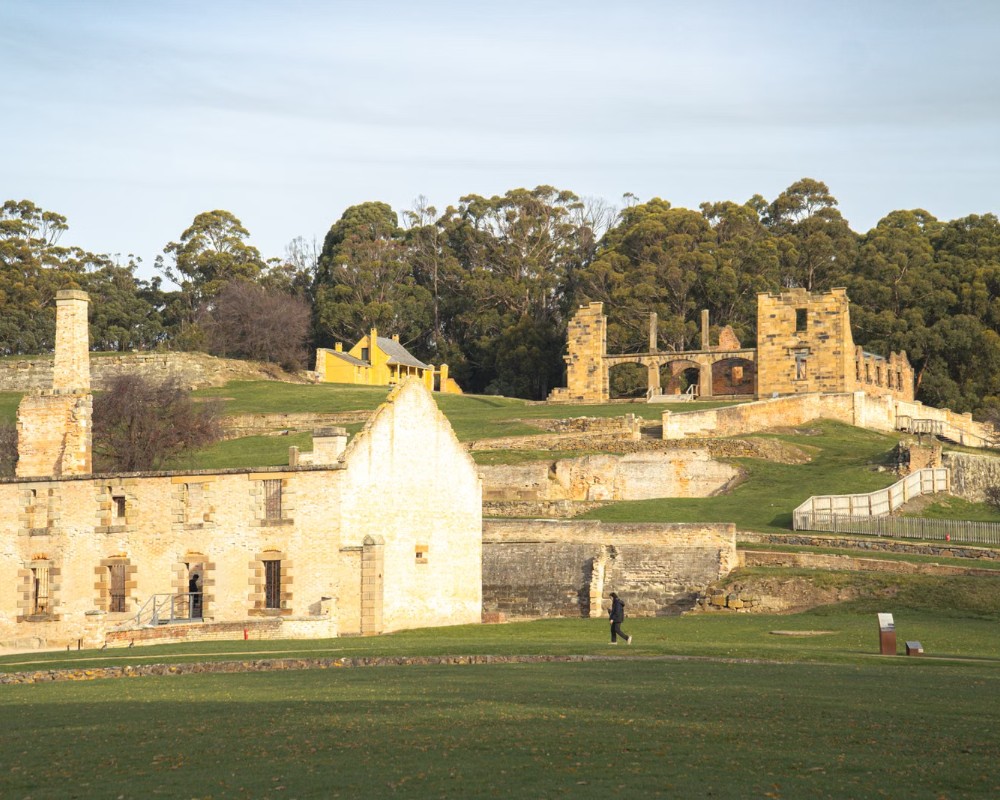

This World Heritage site includes more than 30 buildings and tells the story of a brutal past. Today, this open-air museum welcomes over 250,000 visitors every year and is one of the most significant historic sites in Australia. The Tasman Peninsula’s pristine natural charm creates the perfect backdrop for this historic site. Whether you are looking for an unspoiled location to gather your thoughts or you are here to explore the intense history of Tasmania, Port Arthur won’t disappoint you.
Things To Do in Port Arthur
Historical Attractions
Port Arthur is entirely soaked in history and a visit to this World-Heritage site won’t leave any visitor untouched. The story of Port Arthur begins in 1830, when George Arthur, Governor of Van Diemen’s Land, started the first settlement in the area, originally a timber station.
This exile colony was home to the most feared convicted British criminals until 1877. Both the natural features of the area and the security systems implemented made the prison one of the most inescapable places in Tasmania.
After closing down and abandoned in 1877, the tourism influx started, making the outstanding beauty of the peninsula known to the world. Today, the UNESCO-inscribed site plays a crucial role in telling and remembering the colonial history of Australia.

With over 30 buildings and ruins spread across the 100 acres of the ground, in Port Arthur, you can follow the footprints of convicts, governors, and prison guards. The museums and gardens will allow you to learn all the details of a convoluted past. At the end of your visit, don’t miss out on a boat tour to the Isle of the Dead to admire the beauty of the peninsula from a different viewpoint.
To take in all the aspects of your journey, aim at spending at least 4 to 6 hours wandering around the grounds. However, if you feel like you need more time, your ticket will be valid for two consecutive days.
Natural Attractions
As you lift your eyes from the austere, severe-looking buildings, you will marvel at the unspoiled and utterly dramatic beauty of the Tasman Peninsula. The rugged, spectacular coastline is bordered by towering cliffs and hills covered by a carpet of verdant forests. The 90 minutes drive from Hobart to Port Arthur is no less scenic than the destination itself.
While on the way, stop to enjoy the national park that protects the natural diversity of the peninsula. Here you can spot brush-tail possums, wallabies, bandicoots, and wallabies. Just off the coast, penguins, dolphins, whales, and Australian fur seals populate the pristine waters of the Tasman Sea. looking up towards the tree-tops, you might even get a glimpse of swift parrots, sea eagles, and endangered wedge-tailed eagles.
If you fancy marvelling at stunning rock formations rising from the sea, there is no need to go all the way to Port Campbell. Instead, head to the over 300 metres-high cliffs or to the Blow Hole, Tessellated pavement, Tasman Arch, Waterfall Bay, Devil’s Kitchen, or Remarkable Cave.
Activities and Experiences
As your two-days tour approaches the end, sign up for the next boat tour. Circumvalling the peninsula, such a trip will allow you to see Port Arthur from a different perspective and reflect on the history you have just finished absorbing. The eco-cruises will take you to explore waterfalls, cliffs, and deep-sea caves, all crowned by the bustling of local wildlife.
If you still have time to spare, the many hiking trails that surround Port Arthur will take you at the foothills of the verdant forests that are today the background of the complex. More family-friendly options are shorter and can be enjoyed in an afternoon. If you are an expert hiker, instead, you can find multi-day hikes that will take you atop some of the most scenic cliffs of the area. One of the unmissable ones is the Three Capes Track.
Shopping
Port Arthur is certainly not famous for its endless shopping opportunities, yet you won’t be left short of groceries for your Tasman Peninsula camping trip or of a souvenir. The General Store and Takeaways is the perfect one-stop-shop to fill up your car or backpack with snacks before the next big adventure. For how unspoiled the peninsula can seem, here you will find chocolate, hardware, and bottle shops. For foodies, the Fat Beets Food Hub in Nubeena, a volunteer-run community food store, sells local produce and organic wholefoods.
The Ghost Tour
After dark, lantern-lit ghost tours of about 90 minutes lead small groups through the buildings and ruins, retelling stories of strange events reported at the site. The tour does not need a separate site entry ticket and runs most nights of the week; book ahead, especially in winter, when it is dark early. Bring a warm jacket.
Remarkable Cave and Crescent Bay
A short drive south of the historic site, Remarkable Cave is a sea tunnel through the cliffs where waves surge in from the open ocean; a boardwalk and many steps lead down to the viewing platform. From the same car park, a walk of about 7.5 km and four hours return crosses heath to Crescent Bay, a wild beach backed by huge dunes, with a side climb to Mount Brown. A parks pass is needed.
Tasman Island and Cape Raoul Cruises
Pennicott Wilderness Journeys runs two cruises from Port Arthur. The three-hour Tasman Island Cruise in an open boat runs under some of the highest sea cliffs in Australia to Cape Pillar and Tasman Island, with seals, seabirds and often dolphins. The shorter, enclosed Cape Raoul Cruise takes about 90 minutes and visits the columns of Cape Raoul and its seal colony. Both must be booked.
Where To Stay
Even though your tour of Port Arthur won’t take you more than a day or two, many visitors, struck by the beauty of the peninsula, decide to stay longer in the area. Bay lodges, villas, and retreats dot the grounds around the complex. They make the perfect starting point for your trip or the ideal place for a foot massage after a hard hiking day. The nearby Holiday Park, as well as the sea-front Fortescue Bay Camping Ground, are splendid budget overnight stops.
Stewarts Bay Lodge, a few minutes north of the historic site, has self-contained cabins, family cabins with three bedrooms and deluxe spa chalets in bush beside the sheltered beach of Stewarts Bay, with its own On the Bay restaurant. Amadiya Port Arthur Villas on Safety Cove Road has modern, fully equipped units looking over the historic site, and Bay Retreat Port Arthur, about three minutes’ drive away, sleeps up to eight and suits families. The Port Arthur Motor Inn has motel rooms and a pub-style dining room. The NRMA Port Arthur Holiday Park at Garden Point, about 4 km north, has powered, unpowered and ensuite sites, standard and stargazing safari tents and cabins, a wood-fired pizza oven for guests and a dump point; pets are not allowed.
White Beach Tourist Park, about 12 km west, is the other big holiday park, with powered sites and beachfront cabins. Little Norfolk Bay Events and Chalets at Taranna, about 10 km north, has four spa chalets. The Arthur Highway is sealed all the way from Hobart, but McHenry Distillery’s Radnor Road and the road to Fortescue Bay are gravel. Book well ahead for January and Easter.
Eat & Drink
The area surrounding Port Arthur is sprinkled with seafront cafes, pubs, and wine bars. However, if you are coming from Hobart and looking for a more rustic option, here you can find BBQs and picnic areas to share a meal with your family. For a quick lunch break while on the move, check out the Port Arthur Café in the Visitor Centre, the Asylum Café and the 1830 Restaurant & Bar.
Port Arthur’s food scene runs from the historic site’s own restaurant and cafes to small producers along the Arthur Highway: a lavender farm, a whisky distillery, a chocolate maker, cellar doors and oyster farms. Much of it uses the peninsula’s own seafood, beef and fruit. Most venues are small and family run, and opening days change outside summer, so check before you set out, and book the restaurants on weekend evenings. Self-caterers can stock up at the Port Arthur General Store or the supermarket at Nubeena.
At the Historic Site
The 1830 Restaurant & Bar is the site’s restaurant, open daily for lunch, with seasonal dishes from local growers and a list of Tasmanian wines, craft beers and whiskies, and views over the Penitentiary and the grounds. The Port Arthur Café in the Visitor Centre makes sandwiches fresh on site and opens all day, and the Asylum Café, inside the former Asylum on the grounds, is handy in the middle of a visit. Picnic packs can be ordered online at least a day ahead and collected on arrival, and there are lawns and picnic areas across the site.
Restaurants and Pubs
On the Bay at Stewarts Bay Lodge is the main dinner restaurant near the site, with fresh seasonal produce, Tasmanian drinks and views over Stewarts Bay; it opens Tuesday to Saturday and bookings are needed. The Port Arthur Motor Inn serves classic pub fare. At Taranna, about 10 km north, Little Norfolk Bay Bistro cooks fish from the owners’ own boat, with a whole parrot fish to share as its signature dish. At Eaglehawk Neck, about 20 km north, the Lufra Cafe and Bistro has a bar and windows over Pirates Bay.
Cafes and Sweet Stops
Port Arthur Lavender at Long Bay, about five minutes north of the site, has a waterfront cafe serving lunches and lavender-infused treats, with gardens to wander and a shop selling its oils. Cubed Espresso Bar, a vintage caravan at the Pirates Bay lookout, serves locally roasted coffee and house-made cookies. The Tasmanian Chocolate Foundry at Taranna makes hand-crafted chocolates and ice cream, with a view of the factory floor. In Nubeena, about 12 km west, Lucky Ducks Cafe has a bay outlook, and Nubeena Cafe is good for breakfast. The Pickers Pantry at White Beach serves coffee and cake in a pear orchard in season.
Distilleries and Cellar Doors
McHenry Distillery, a short drive along the gravel Radnor Road on the slopes of Mount Arthur, makes award-winning whisky, gin and vodka with spring water from the property; distillery and brewery tours run on weekdays and must be booked. Premaydena Hill, about 15 km west, is a family farm with a hilltop cellar door pouring its own wines and selling its Black Angus beef. On the way in or out, the Dunalley Bay Distillery Beachfront Tasting Hut at Murdunna pours gin, whisky and rum with barista coffee beside the water.
Worth the Drive
Bangor Vineyard Shed near Dunalley, about 45 minutes north, is the classic last stop, with estate wine tastings, local oysters and Bangor lamb and views over the bay. Doo-Lishus, a family-run food van at the Blowhole at Eaglehawk Neck, is a handy snack stop on the coastal sights, and the Tasman Honey Shed at Murdunna sells pure Tasmanian honey. Blue Lagoon Oysters on Boomer Bay Road sells Pacific and Angasi oysters straight from the farm. For self-catering, the Port Arthur General Store has takeaway food, grocery staples and fuel.
History
The Tasman Peninsula is turrakana, the country of the Pydairrerme people of the Oyster Bay nation. In 1830 Lieutenant-Governor George Arthur set up a timber station here, and from 1833 it became a penal settlement for convicts who had reoffended in the colony. Its buildings were largely built by the prisoners themselves: the boys’ prison at Point Puer operated from 1834, the great flour mill and granary of 1845 became the Penitentiary, and the Separate Prison was built from 1849.
The settlement closed in 1877, and the district was renamed Carnarvon; bushfires in the 1890s gutted several buildings, and the Port Arthur name returned in 1927. Tourists began arriving almost as soon as the prisoners left. In 2010 the site was inscribed on the World Heritage List as one of the Australian Convict Sites.
Getting to Port Arthur
Port Arthur is about 95 kilometres from Hobart, around 90 minutes by car on the Tasman Highway to Sorell and then the Arthur Highway through Dunalley and Eaglehawk Neck. The road is sealed all the way and is used by caravans and motorhomes, though it is winding in places, so allow extra time. There is no railway, and most visitors come by car or on a day tour from Hobart.
Experiences
- Cultural
- Historic/Heritage
- Remote
- Rural/Country
- Self-Drive
- Soft Adventure
Popular Activities
- Bush Walking
- Caravan and Camping
- Driving
- Food and Wine
- National Park
- Sightseeing
- World Heritage
About Port Arthur
- Locality: Rural locality
- Port Arthur Postcode: 7182
- State: Tasmania
- Region: Hobart and South
- Latitude: -43.13984
- Longitude: 147.85067
- Elevation: 35m
- Population: 251
- Median Income: $21528
- Area (Sq/km): 56.502
- Timezone: Australia/Hobart
Accommodation In Port Arthur
Discover some of the accommodation in and around Port Arthur
