
Kiandra, NSW
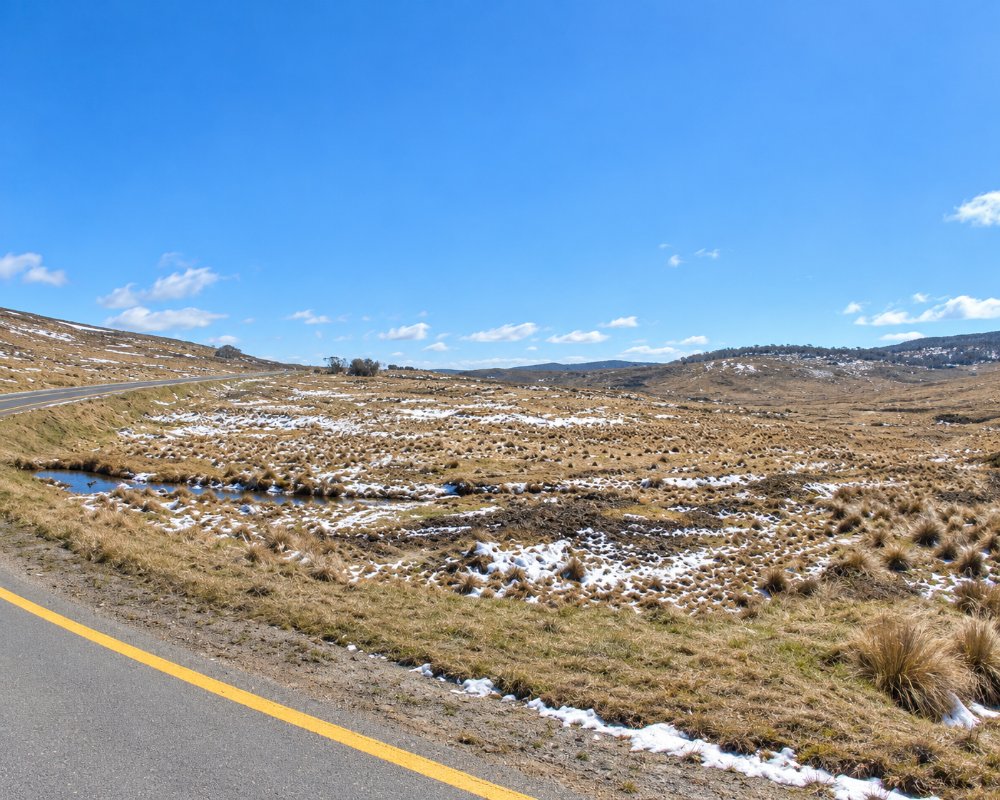
Kiandra is a ghost town on a bare, windy plain beside the Snowy Mountains Highway in northern Kosciuszko National Park, about 40 km north-west of Adaminaby at 1,400 metres. Thousands of people lived here during a short gold rush, and it is where skiing began in Australia. Very little is left, and the 2020 bushfires destroyed most of what had survived.
Known For
- A gold rush town of 1860
- The birthplace of skiing in Australia
- The heritage walk across the old town site
Things To Do in Kiandra
Kiandra Heritage Track
A loop of about 1.2 km crosses the old town site, with signs marking where the hotels, stores and banks stood. The track has reopened since the fires, though some of the signs and structures along it are still damaged.
The Courthouse
The stone courthouse, later a chalet and ski lodge, was the main building left standing. It was gutted in January 2020, along with the restored cottages nearby. The national parks service has stabilised and partly re-roofed it, but the buildings were closed when this was written.
The Diggings and the Plains
Water races, dams and mullock heaps from the mining years can still be traced across the hillsides, and the cemetery lies a short way from the road. The plains around Kiandra are good for wildflowers in January and for cross-country skiing after heavy snow.
Goldseekers Track
This 3 km self-guided loop starts at Three Mile Dam campground, off Link Road, and winds through snow gums and across snowgrass flats past an abandoned ore-crushing battery from the mining days. In spring the flats are covered in billy buttons and snow daisies, and in winter it becomes a cross-country ski and snowshoe route.
Australian Alps Walking Track
Kiandra is one of the access points for the Australian Alps Walking Track, the long-distance route along the Great Dividing Range between Walhalla in Victoria and the ACT. Walkers should register a trip intention form and carry a personal locator beacon, which National Parks lends free at Tumut and Jindabyne.
Where To Stay
There is nowhere to stay at Kiandra and no camping on the site. Adaminaby and Talbingo are the nearest towns, and there are national park campgrounds along the highway.
Each national park campground has no camping fee but a small online booking fee, and stays are limited to 14 nights at one campground and 21 nights in the park. Three Mile Dam, off Link Road near Selwyn, takes tents, camper trailers and caravans on grassy unmarked sites, with toilets and barbecues, but its gates close from the June to the October long weekend. Bullocks Hill, just off the highway between Kiandra and Yarrangobilly, takes caravans and has a horse yard but is closed in winter, and Yarrangobilly Village campground, beside the river, has easy caravan parking just off the highway.
National Parks also lets rooms at Yarrangobilly Caves House. In the towns, Adaminaby has Alpine Tourist Park, with cabins and powered drive-through sites, heated amenities and a skiers’ drying room and the Snow Goose Hotel, and Talbingo has Tiny Away Escape @ Talbingo Alpine, with cabins, camping and pools. Pets cannot stay in the national park.
Eat & Drink
There are no facilities of any kind. Carry food, water and warm clothing.
There is no fuel at Kiandra. In the snow season the Selwyn Centre at Selwyn Snow Resort, about 7 km away, has a bistro and a café with barista coffee. The Snow Goose Hotel in Adaminaby serves dinner seven nights from 5pm and pizzas in the bar, and the town has a bakery, a supermarket and a service station that hires chains in winter. On the western side Talbingo has fuel, and Tumut, about 90 km away, has supermarkets, bakeries, pubs and cafés.
The Snow Goose Hotel was built in 1957 for Snowy Scheme workers and serves home-style pub meals and nightly specials, with lunch on weekends; the hotel was offered for sale in 2026 but is still trading. Selwyn’s own advice is to hire snow chains from service stations or ski hire shops in Cooma, Adaminaby or Tumut.
History
Gold was found here late in 1859, and within months as many as 10,000 people had arrived. The rush was over in little more than a year, though mining went on in a small way for decades. In the winter of 1861, Norwegian miners made skis from fence palings, and the Kiandra snow shoe club that grew from their races is claimed as the first ski club in the world. The last residents left in the 1970s.
The northern high plains are the country of the Walgalu (Wolgalu) people, often treated as part of the wider Ngarigo nation. The name Kiandra comes from an Aboriginal word recorded as Gianderra, said to mean “sharp stones for knives”. The Pollock brothers, cattlemen, found the gold in November 1859, and the present courthouse was built in 1890, later becoming the Kiandra Chalet; Australia’s first T-bar was installed nearby in 1957. The national parks service restored the courthouse from 2009, before the Dunns Road fire gutted it in January 2020.
Getting to Kiandra
Kiandra is on the Snowy Mountains Highway between Adaminaby and Talbingo, at the turn-off to Cabramurra and Mount Selwyn. The highway is kept open in winter; carrying chains is recommended from the June to the October long weekend, and they must be fitted when signs or rangers direct. There is no fee for driving through on the highway, but in the snow season a park entry fee applies on Link Road to Selwyn.
There is no fuel between Adaminaby and Talbingo, and the climb from Talbingo is steep and winding. Snowy 2.0 trucks use the highway and call their positions on UHF channel 40.
Experiences
- Historic/Heritage
- Nature based
- Remote
- Rural/Country
Popular Activities
- Bush Walking
- Caravan and Camping
- Driving
- National Park
- Sightseeing
About Kiandra
- Locality: Rural locality
- Kiandra Postcode: 2630
- State: New South Wales
- Region: Snowy Mountains
- Latitude: -35.8770
- Longitude: 148.4990
- Timezone: Australia/Sydney
