
Greta, NSW
Greta is a small town on the New England Highway between Maitland and Singleton, close to Branxton and the northern edge of the Hunter Valley vineyards.
Known For
- The Greta Migrant Camp
- An old coal and railway town
- A quiet main street off the highway
Coal was mined at Greta from the 1860s, and the rich seam found here gave its name to the Greta coal measures worked across the lower Hunter. The mines have gone, and the highway traffic now uses the expressway, leaving a quiet country town.
Things To Do in Greta
The migrant camp story
An army camp on the edge of town became one of the largest migrant reception centres in Australia in 1949. Until 1960 about 100,000 people from post-war Europe passed through it. The site is now farmland, but a memorial and the small local museum tell the story, and many families return to see where their Australian lives began. The museum opens limited hours.
The volunteer-run Greta Historical Museum is in the former council chambers at 96 High Street, with photographs and objects from the coal mines, the army camp and the migrant camp; its listed hours are Wednesday and Saturday, 11am to 3pm, but phone first. A brick memorial to the camp was built off Camp Road from 2020, where more than 450 buildings once stood.
High Street
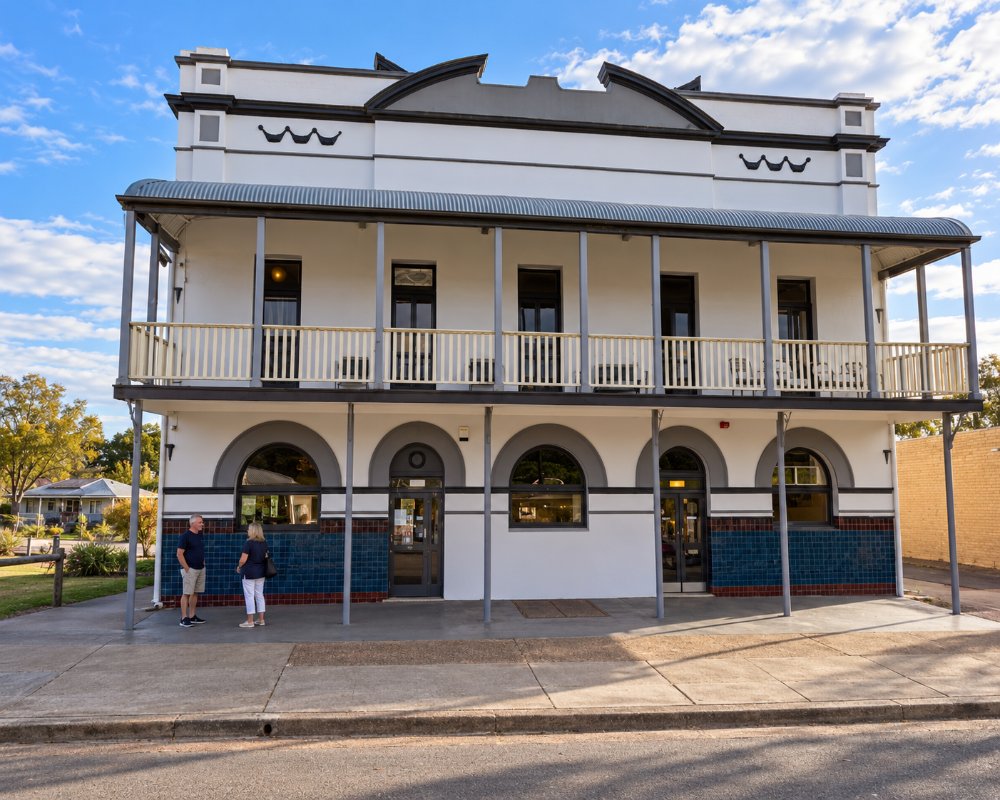
Greta’s old main street runs beside the highway, lined with buildings from the coal-boom years, some of them old churches now used as shops. The town once had four hotels and four churches.
Wine country
The vineyards of Rothbury and Lovedale are about 15 minutes south.
Where To Stay
Greta has a hotel and a few cottages. There is far more choice in the vineyards and in Maitland.
The Thirsty Horse on High Street has rooms above its brasserie. Greta has no caravan park; Cessnock council’s Branxton Oval RV area, about 6 km north-west, has long taken fully self-contained vehicles with water and a dump point, but its rules were last published years ago and the ground can flash flood, so check with the council first. Country Acres Caravan Park at McDougalls Hill, about 20 km, and Caracourt Caravan Park on the far side of Singleton, which has a dump site, have powered sites and cabins.
Eat & Drink
The pub serves meals, and the main street has had a cafe, though we could not confirm what it trades as now.
The Thirsty Horse is the main place to eat, open daily from early morning, with a coffee lounge, a brasserie doing all-day breakfast and pub classics, a beer garden, a kids’ shed and weekly specials such as a Friday steak night. The Lochinvar Hotel, about 9 km east, is the next country pub.
The Thirsty Horse is the old Tattersalls Hotel of about 1892 under a new name, and the last of Greta’s four coal-boom pubs. Its weekly specials run from a Friday steak night, when kids eat free, to a Sunday roast, and it has a sports bar, a cocktail lounge, a whisky bar and rooms upstairs. Coles is at Huntlee, about 5 km away.
History
This is Wonnarua country. The town was surveyed in 1842 and named Greta, probably after the River Greta in Cumberland, England. Coal mining began in 1862, kerosene shale was found in 1864, and in 1886 the geologist Edgeworth David identified the Greta coal seam; by 1907 ten collieries were working, and the last, Leconfield, closed in 1957. An army training camp opened in 1939 and became the migrant reception centre from June 1949 to January 1960.
Getting to Greta
Greta is 20 minutes west of Maitland and about two and a quarter hours from Sydney by the M1 and the Hunter Expressway. Some Hunter line trains stop at Greta station.
Experiences
- Cultural
- Historic/Heritage
- Rural/Country
- Self-Drive
Popular Activities
- Caravan and Camping
- Driving
- Food and Wine
- Sightseeing
About Greta
- Locality: Urban locality
- Greta Postcode: 2334
- State: New South Wales
- Region: Hunter
- Latitude: -32.68896
- Longitude: 151.38811
- Elevation: 59m
- Population: 2830
- Median Income: $31096
- Area (Sq/km): 20.707
- Timezone: Australia/Sydney
