
Blyth, SA
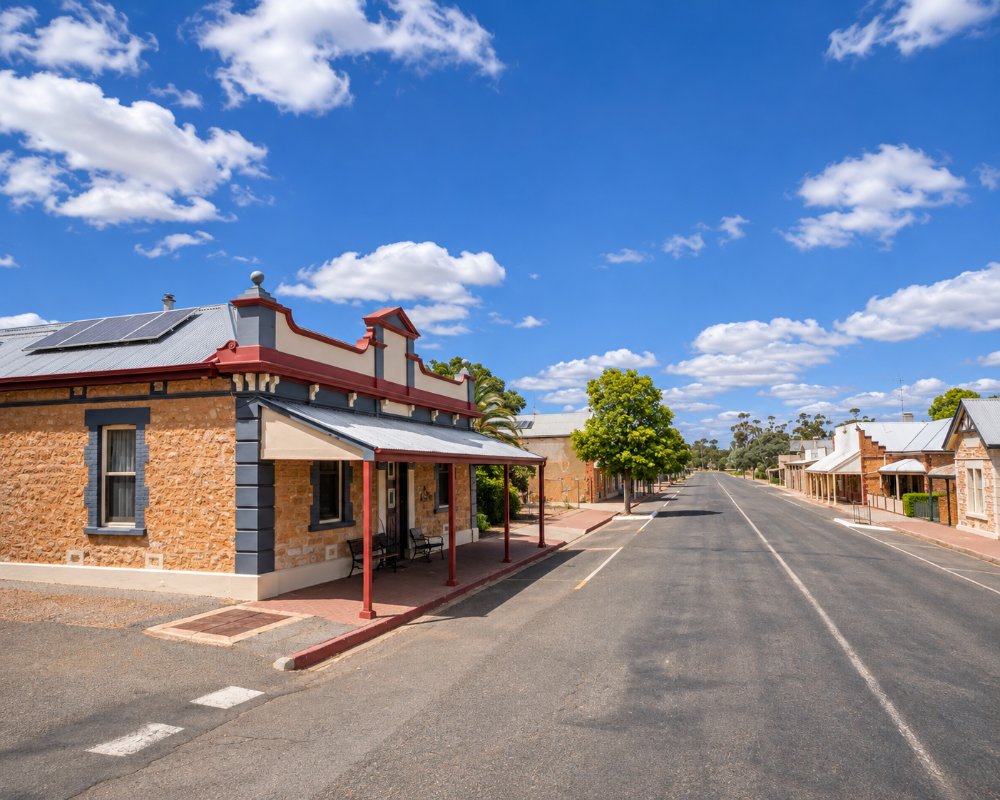
Blyth is a farming town of about 440 people on the plains below the Clare hills, 13 kilometres west of Clare. Wheat, barley and legumes stretch away to the west, and the wooded range fills the eastern skyline.
It is a neat, quiet place with more to see than most towns of its size, and its free camp at the oval makes it a handy base for caravanners visiting the Clare Valley.
Known For
- Medika Gallery in a former Lutheran church
- A community-run cinema
- A free 96-hour camp at the town oval
Things To Do in Blyth
Medika Gallery
The artist Ian Roberts shows his detailed paintings of Australian birds and plants in the former St Petri Lutheran church, built in 1886. Entry is free.
Blyth Cinema
Volunteers run a two-screen cinema in the main street, showing new releases at prices well below the city.
Dean Nicolle Eucalypt Walk
Opened in 2025, this 4.4 kilometre return walk along the old railway corridor north of town passes more than 2,000 trees of almost 300 eucalypt species.
Padnaindi Reserve
A small park on South Terrace has a series of laser-cut steel panels telling the story of farming on the plains, with barbecues and shade.
Brooks Lookout
About six kilometres east, on the road up to Clare, the lookout has a picnic shelter and a view across the plains to Yorke Peninsula. It is on private land and is closed during the fire season.
Terrace Garden
Planting began in 2020, and this volunteer-run native garden now holds about 1,400 plants of some 700 species. Emu bushes (eremophilas) dominate, mixed with eucalypts, grevilleas, banksias, hakeas, correas and melaleucas, and about 230 species carry name plates. Flowering peaks from August to November, and the Friends of the Terrace group works in the garden most Monday mornings.
Lomandra Trail
This 2.5 km return walk follows the south side of the golf course from a signed entrance on Curnow Road. The first 250 metres are lined with about 400 species of planted natives, then the path runs through local species to the golf club, where a seat looks across the plains and back to the Clare hills.
Native Plants at Medika
Ian Roberts grows several thousand native plants a year from seed and cuttings collected in his arboretum in the Clare hills, many of them rare species or ones that cope with the region’s alkaline soils, and sells them from the gallery alongside prints, cards and his eucalypt books. The gallery opens on weekdays and Saturday afternoons and is closed on Sundays.
Where To Stay
The Blyth Hotel, built in 1876, has rooms.
Self-contained travellers can stay free for up to 96 hours at the Blyth Town Oval, which takes vans of any size and has toilets, showers and water. There is a dump point in town. Expect a crowd on winter Saturdays when football and netball are played.
The Blyth Hotel in Harley Street offers traditional pub rooms with shared bathrooms, some with access to the balcony, and has a bar, dining room and children’s playground. The Quarters at 1 South Terrace has private rooms in a shared house at weekly rates, set up for vintage and harvest workers and students rather than holidaymakers.
At the sportsground RV park the sites are unpowered and payment is by donation, which helps the volunteers who keep the toilets, showers and dump point in order. For a couple’s stay, Windmill Cottage, owned by the Medika Gallery family, is a self-contained cottage on Scobie Road in the hills near Clare, with a two-night minimum.
Clare, 13 km east, has the nearest caravan parks, motels and B&Bs. Brinkworth, 19 km north, has a low-cost progress association stop with powered sites, and Snowtown‘s small council caravan park is about 30 km west. Lochiel‘s tiny houses, facing the pink lake, are about 35 km south-west.
Eat & Drink
The Blyth Hotel serves lunch and dinner, and the Blyth Cafe in Harley Street sells coffee, rolls and hot food. Clare is 15 minutes away for restaurants and supermarkets.
Blyth is small, but it covers the basics for a day on the plains. The Blyth Hotel in Harley Street, a two-storey stone pub with a verandah and balcony, serves pub meals in the dining room and front bar and does takeaway for travellers heading through; its playground makes it an easy stop with children. The Blyth Cafe, a few doors along at 8 Harley Street, opened in 2019 and is the daytime stop for barista coffee, fresh salad rolls, hot food and baked treats. On film nights the Blyth Cinema runs a full candy bar. There is no supermarket in town, so stock up in Clare, 13 km east, where you will also find bakeries, cafes and cellar doors, or in Balaklava, about 40 km south.
History
The plains were the country of the Padnaindi, a Kaurna group. The district was surveyed in 1860 and named after the politician Sir Arthur Blyth, and the town was laid out in 1875. A narrow gauge railway from Port Wakefield arrived in 1876 and the line closed in 1989.
Getting to Blyth
From Clare, take the Blyth road west down the range. From Adelaide, an alternative to the Horrocks Highway runs through Balaklava and up the plains to Blyth. Brinkworth is 19 kilometres further north.
Experiences
- Rural/Country
- Self-Drive
Popular Activities
- Bird Watching
- Bush Walking
- Caravan and Camping
- Cycling
- Driving
- Sightseeing
About Blyth
- Locality: Urban locality
- Blyth Postcode: 5462
- State: South Australia
- Region: Clare Valley
- Latitude: -33.84551
- Longitude: 138.49029
- Elevation: 199m
- Population: 518
- Median Income: $29900
- Area (Sq/km): 159.122
- Timezone: Australia/Adelaide
